
When the Trump administration’s Department Of Government Efficiency (DOGE) was disbanded late last year, employees at the U.S. government’s vast labyrinth of agencies, boards, and commissions might have been forgiven for breathing a sigh of relief. In less than a year, the Elon Musk-helmed agency’s slash-and-burn decimation of the federal workforce had left some offices barely operational and eliminated others altogether before ceasing to exist in November 2025.
But it appears that seeing thousands of the unelected civilians whose labor makes the government run lose their jobs wasn’t enough to slake Trump administration officials’ thirst for punishment — they’re just being quieter about it now. The headlines may have moved on to other catastrophes, but smaller tragedies continue to unfold in the background.
As Confined Space’s Jordan Barab reported on Thursday, the administration has been slashing away at independent entities like the National Labor Relations Board, the Merit Systems Protection Board, and the Consumer Product Safety Commission that tend to punch above their weight without drawing much attention outside of their specialized spheres.
On May 1 — International Workers’ Day — administration officials targeted the Federal Mine Safety and Health Review Commission (FMSHRC), abruptly firing Commissioner Moshe Z. Marvit and closing down one of the agency’s three offices. In total, the FMSHRC lost 16 workers as well as the entire Pittsburgh, PA office that day. The remaining offices are in Denver, CO and Washington, D.C., both a long ride away from Appalachia and its coal miners.
Marvit has spent the bulk of his career (including 12 years as a Supervisory Attorney-Advisor at the FMSHRC) unabashedly representing workers’ interests, both in court and as a freelance journalist for outlets like In These Times, The Washington Post, and Dissent. That pro-worker reputation preceded him when President Joe Biden first nominated him for a commissioner position back in 2022; it took three tries to get him confirmed to his current role, and he’s not giving it up without a fight. On May 7, Marvit filed a lawsuit against the Trump administration over what he calls his “unlawful and unjustified purported termination,” which has left a backed-up FMSHRC even more short-handed.
According to the lawsuit, Marvit was informed of his firing via an email that read, “On behalf of President Donald J. Trump, I am writing to inform you that your position as Federal Mine Safety and Health Review Commissioner is terminated, effective immediately.” Within minutes of receiving the email, according to the lawsuit, Marvit had lost access to his work computer and work cell phone, receiving no follow-up communications or termination paperwork.
According to Marvit’s attorney, “President Trump’s removal of Commissioner Marvit marks the first time in the Mine Safety Review Commission’s nearly 50-year history that a President has attempted to remove a Mine Safety Review Commissioner from office.” The Mine Act lists only three reasons for which a member of the Mine Safety Review Commission can be removed by the president: “inefficiency, neglect of duty, or malfeasance in office.” Marvit, whose term as commissioner was slated to end on August 30, 2028, has not been officially accused of anything of the sort. If his firing is allowed to stand, it could also set a dangerous precedent — and allow President Trump to take aim at other nominally “independent” agencies.
The FMSHRC was created under the Federal Mine Safety and Health Act of 1977, one of the country’s strongest and most enduring worker protection laws. The five-person commission (which is now down to three members) is tasked with handling legal disputes that arise under the Mine Act, including the determination of appropriate penalties. Both of the most common types of cases FMSHRC handles have direct impacts on working miners: civil penalty cases, in which the Mine Safety and Health Administration (MSHA) has issued a citation to an operator who then decides to challenge it, and discrimination cases, in which a miner makes a claim that they were punished in some way for making a safety-related complaint.
As government agencies go, FMSHRC is about as apolitical as they get; miners and their advocates appreciate the work they do to help workers, and mine operators generally appreciate the agency’s ability to resolve issues like mine closures at an expedited pace. Even under a Department of Labor that has pushed a brutal anti-regulatory agenda, it’s unclear who the constituency for these kinds of deep cuts even is. “I wonder if there’s a list of agencies that the OPM (Office of Personnel Management) and the White House have been working down, and we happen to be near the bottom of that list, but they’re getting to us now,” a source with knowledge of the agency’s inner workings told In These Times. (The source requested anonymity out of concern for possible retaliation.)
Rather, their fear is that the gutting of the FMSHRC signals the administration’s potential appetite to go after MSHA and its ability to inspect mines for safety violations. Two of the FMSHRC’s three members, both appointed by Democrats, will end their terms in August, leaving one (appointed by a Republican) remaining, plus four empty seats. FMSHRC will now have to push forward with a skeleton crew, and if they’re unable to reach quorum, even less will get done. Laws only work if they’re followed, and critics allege that the Trump administration has signaled that following the rule of law is not high on its list of priorities. As the source with inner knowledge of FMSHRD wondered, “What if the reason they’re not concerned about us being around is because they’ve decided they’re not really going to enforce the Mine Act at all?”
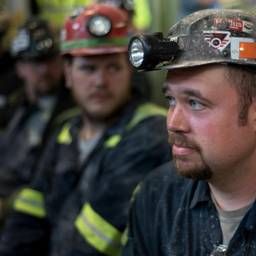
The Trump administration’s war on coal miners’ health has become especially pronounced during the president’s second term. As I’ve reported, the simpering “Trump digs coal” image the administration seeks to project is vastly at odds with the actions it’s taken to limit miner protections, endanger their health, and exacerbate the black lung crisis consuming Central Appalachia, where one in five veteran miners has black lung and one in 20 has the most severe and totally disabling form of the disease.
In April, a badly needed new federal standard to limit miners’ exposure to silica dust was put on “indefinite” delay by the Trump-captured MSHA, pending a judicial review within MSHA’s own convoluted bowels. Following decades of lobbying from miners, advocates, and worker health and safety groups, the rule was finally issued in 2024 during the Biden administration. However, once Trump regained power, his MSHA took pains to halt the rule’s enforcement and allow mining industry interests to weaken and delay it further.
The rule has been in limbo for months, and there’s no telling where it goes from here. Meanwhile, “every day of delay is another death sentence for our communities,” said Rebecca Shelton, Director of Policy for Appalachian Citizens’ Law Center (ACLC), which has been leading the fight for a silica rule for decades. “If the Trump administration actually cared about protecting coal miners from black lung, we’d have a strong silica rule in place right now. Instead, they are hiding behind a ridiculous legal process to delay action while miners get sick and die.”
The ACLC recently released a report assessing MSHA silica dust sampling results taken from 389 coal mines from the rule’s intended implementation date of April 2025 through December 2025, and found that 20% of those surface and underground mines contained “dangerous and toxic” levels of silica dust. Twelve of the studied mines had exposure levels of more than double the proposed silica dust rule’s permissible exposure limit — and four of them were located in West Virginia, the epicenter of the black lung crisis.
All of these developments are happening within two fairly obscure government agencies that most Americans have likely only heard of if they happen to be directly impacted by the industries they represent. It may seem inconsequential, but to the workers who depend on agencies like the FMSHRC and MSHA to protect their rights and keep them safe during their extraordinarily dangerous workdays, what goes on inside those beige government offices may be a matter of life or death.


How many other stories like this are unfolding elsewhere in the country right now? How many other government agencies are seeing these same kinds of death-by-a-thousand-cuts scenarios play out? How many dedicated specialists have been fired without cause? How many other lifesaving rules and regulations have been put on ice or buried entirely? How many workers’ lives are now at risk because some anti-government zealot in the OPM office picked a name off a list today?
It’s almost overwhelming to think about, but constant vigilance and a refusal to accept this kind of clandestine malfeasance as inevitable or acceptable are some of the only tools organizers have to combat this viciously anti-worker administration and its patented “flood the zone with shit” strategy.
As Marvit’s attorney said in a statement: “The Mine Act’s protections from removal without cause are not trivial. They are a key safeguard that Congress built into the law to make the Commission’s independence real and protect miners. President Trump is attempting to dismantle this agency in defiance of the law.”
The suit will now work its way through the courts before Marvit receives a ruling. Until then, FMSHRC will operate at reduced capacity and America’s coal miners will continue to go to work each day under increased risk of injury, disease and death.

Get 10 print issues of our award-winning, worker-first journalism here!

Kim Kelly is a freelance journalist and author based in Philadelphia, PA. She is a labor writer for In These Times and regularly contributes to many other publications. Her first book, FIGHT LIKE HELL: The Untold History of American Labor, and the young readers edition, Fight to Win! Heroes of American Labor, are both available from One Signal/Simon & Schuster. Learn more at kim-kelly.com.


