If We Can Intifada the Poems...
Two poems from When the Arab Apocalypse Comes to America.
George Abraham
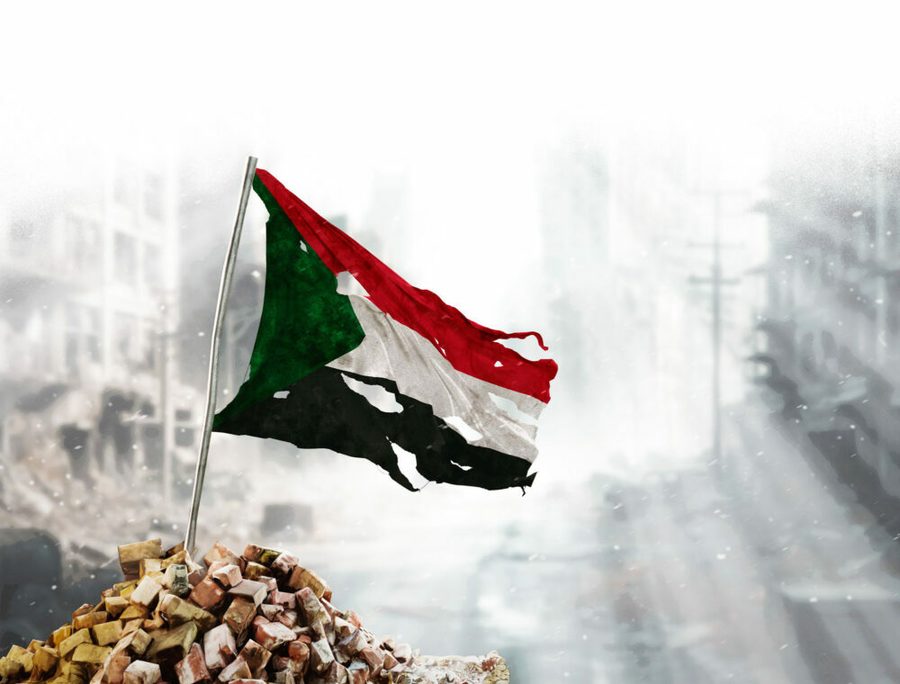
As I sit down to write this — more than 900 days into the U.S.-Zionist genocide against Palestinians in Gaza, more than three years into the United Arab Emirates-funded genocide in Sudan, as Zionist colonial aggression actively displaces more than a million of our kin in Lebanon and drags the United States into a regional war that has killed more than 1,700 civilians in Iran— we are approaching the event horizon of a totalizing planetary catastrophe. The ruling class has made clear that their priorities are weapons manufacturing and war profiteering at any expense, including all of our lives, both within and beyond the borders of the United States.
These poems come from my forthcoming collection, When the Arab Apocalypse Comes to America, a book produced by Palestinian grief and anticolonial resistance, in this genocidal moment.
While poetry cannot materially save us, it can become a vessel through which one arrives at a clarity necessary for surviving all of this. While it cannot physically dismantle Western imperialism, it can serve as a vehicle through which we learn to ask harder questions, both of these necrotic systems of power and of our own selfhood within these systems.
As I reflect on the broader histories of displacement and militarism that brought my family to the United States, poetry becomes a space wherein interfamilial grief touches sociopolitical reckonings via the Palestinian body politic. Here, the grief over my brother, incarcerated and held hostage against his will mid-paranoid break from reality, touches many layers of Palestinian grief: of interconnected U.S.-Zionist carcerality, surveillance, policing and military rule, of the biopolitics and necropolitics of disposability. Might our grief, then, be a tunnel that allows us to transform our sorrow into rage, our mourning into action, our imperial melancholy into anticolonial worldbuilding? Who are we becoming, in empire? What work do we need to do, inside ourselves and amongst our collectives, to become more capable of dismantling these carceral, necrotic systems, and building structures of care and life in their wake?
Do my socks break the boycott or were they stolen?
I could wonder in a poem I’d title “American
Sadness,” if I was delusional enough to betray my people
For such things. None of this is brave. But all of it is failure
To comply: the hole almost erasing the puma’s leap across
My arch, the one foot refusing to pair with the other, the brief
& not so brief traveling of lint as matter compressed to almost
Rubble. I wear a thousand articles these days. I could write
The metaphor of static lift & stowaways, the obvious migrations
Of dressing & unfolding. What I want to say: I’m out of cleans
& pairs, I tire of lists I cannot end. Or I could remember my brother,
Before the paranoia consumed him, his dreams of hacks & scamming
Zionist companies out of their inventory. A returning. Since October,
He’s rotted in the jail of a state whose only language is failure.
He steals to write me every day, blaming Teita, or our mother,
& not the grief of stolen fathers, for the rubble of his American
Delusions. I cannot say our lives are the un-mercy of a state
That’s never coming. I just want to know his small needs: how holed
His socks, if he’s eaten, if our aid is even reaching him. I do not speak
Of Palestine. I forget his small lies, his country-sized wounds, as I fail
Every version of him. I do not ask myself: have I forgotten to care
For myself today, or have I cared myself into a life of forgetting?
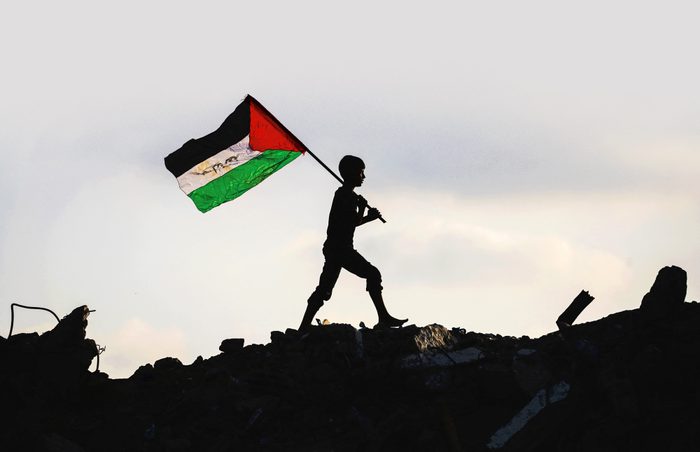
If here, within the endless present tense of empire, we now
can name what we’ve become: nation of blood, effigy of now.
If, after the orders from boards of lonely offices, there still
remains anything to call human in this disease of now.
If the mountains, so unmoved, or the rivers, so unstirred,
could hold these tectonic screams, as if they were a breeze for now.
If my family could have known, we’d barely survive 3 generations
in this land of shining seas, would they un-flee here now?
If my aunt, bruised blue & breathless in the heat of another Floridian
trailer, wasn’t the first queer elder stolen from me, but a metaphor for now.
If our grief of stolen fathers could touch & enflame our grief of martyred
children, of stolen corpses, of emptied caskets, this freeze of now.
If 1967 or 1987 or 2018 or 2021 could unhear the words: by this time
next year, Palestine will be free, we live, and breathe for, now.
If we can believe in water, then we can believe in the un-countrying
of water, the un-surfacing of corpses, the lunar un-ease, for now.
If we can un-green the music, un-yellow the eyelids, un-red the impossible
wounds — if we can intifada the poems, they will only be elegies for now.

Get 10 print issues of our award-winning, worker-first journalism here!
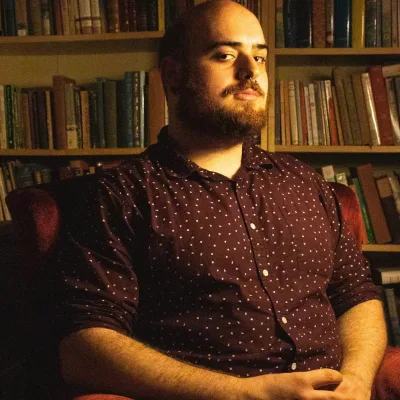
George Abraham is an Arab American Book Award-winning poet who teaches at Amherst College. They are co-editor of Homosexual Intifada (Interlink Books, 2026) and author of When the Arab Apocalypse Comes to America (Haymarket, 2027).