Iranian Culture Will Not Be Erased
Trump said a “whole civilization will die tonight.” We can’t be destroyed so easily.
Yasmin Zacaria Mikhaiel

Growing up, my aunties would joke that I was more Persian than my dad. He immigrated to Chicago in 1979 and deeply tried to assimilate, rendering me a certain type of diaspora Iranian with fragmented cultural connections. In adolescence, I spent summers with my family in Los Angeles — known colloquially as Tehrangeles — sitting at my aunties’ kitchen counters, desperate to learn what my father was unwilling or unable to teach me, eager to soak up their stories of homeland and memorize recipes.
There is both heartbreak and privilege in being able to leave Iran, but it’s a decision that four million Iranians have made since the 1979 Iranian Revolution. In the years since losing my dad to cancer, my sense of the timing of who leaves Iran and when has grown sharper.
Though I often feel at a loss for what to do, the weight of the current war washes over me as I scroll social media. It’s unbelievable for the president of the United States to proclaim that, if his demands are not met, a “whole civilization will die tonight, never to be brought back again.” To take all of us out at once? We can’t be erased so easily.
I can’t help but want to gather and commit to taking space for our culture. It feels like an impossible time to celebrate anything, but there are Persian traditions thousands of years old that demand we honor our changing seasons and recognize our perseverance as a community. In my desire to further connect with my Iranian roots and share artistic space in the diaspora, I fell into cultural organizing work and met friends also yearning for and building our community.
Allison Parssi is a DJ and curator/producer of Shokoufeh, an itinerant music night of Middle Eastern pop, disco, electronic and psych-rock from across the decades. In 2023, for Nowruz — the Persian new year, celebrated in the spring — she carved a space that hadn’t existed.

“In all of my time in Chicago, I could never find parties or nightlife events celebrating the new year,” Parssi says. “Everything was either in New York or LA. I figured I probably wasn’t the only one looking for something like this, and I finally had all of the tools — music, live DJ skills, event planning — and the time to start the thing that I had been searching for.”
That’s how we met, seeding a friendship that later blossomed into an artistic partnership between Shokoufeh and my creative agency, BIYA BIYA, during a time that’s been horrific.
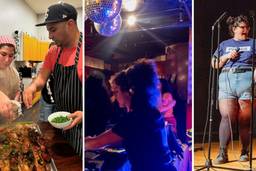
The December holiday Yalda marks the winter solstice, the longest night of the year. As a series of nationwide demonstrations heightened in Iran, Parssi and I desired to curate a night for grief and joy. For our “Yalda Night Life 2025” event, we offered a “mix of live performance, dance and DJ sets [that] really gave folks a ‘choose your own adventure’ kind of celebration,” as Parssi puts it. “It felt like there was something for everyone that was really special.”
A few days later, across 200 cities in Iran, protestors would take to the streets in the largest popular uprising in years. Now, Iran and Lebanon are undergoing a bombardment similar to what Palestine has been enduring since 2023. Amid rising death tolls, the heaviness in the SWANA community — Southwest Asian and North African — is palpable, and yet it causes much divide across diasporas desiring an end to war and a regime that must fall for the sake of the people’s future.


From the heart of a complicit imperial power, I am surrounded by survivor’s guilt. My friends are largely immobilized by grief, rage and exhaustion, and some days I, too, feel buried. What keeps me moving is the thought that we can’t succumb to being erased. At my disposal are the tools of an artist and cultural producer, and using them has fought off so much alienation, even as I struggle to navigate fiercely opposing views.
Nowruz, marking the spring equinox, centers around the triumph of light over dark. The holiday season presented another opportunity to gather and commit to traditions that began long before the regimes and administrations attacking our people. For the Shokoufeh event at Podlasie Club on March 22, we invited Persian DJs Nick AM and Athena to debut Iranian and electronic music to a Chicago crowd desiring release.
Nick, who grew up on the East Coast, recalls his parents pulling him out of school to celebrate Nowruz with music and dance: “One year, our Farsi and piano teacher organized a show with all of her students, and I trained for a special dance portion of the show […] and probably the first Nowruz performance I ever did.”
Videos capture Yalda Night Life performances in Chicago on Dec. 20, 2025.
Nick’s artistic collaborator and wife, Athena, immigrated to New York just a couple of years ago. He credits her for having the best input when it comes to preparing music for their sets, saying, “She’s from Iran and is just so much more Persian than I’ll ever be.”
That sense of being Persian “enough” cuts deep as relationships in community and family can become strained regarding political alignments or silence. Nick confides, “We can’t really relate with our American friends about it and it’s not something they care about. But even within our community, everybody has opposing opinions. I guess that’s why it’s good to have these events in loud rooms where the music unifies us and we have a few hours where we don’t argue and can just be together and have some moments of joy.”
Parssi maintains that “spaces for reprieve and free thought can lead to organizing just as much as official organizing events.” These gatherings function as alternate futures and feel even more important now, Parssi adds, “not in the ‘we have a right to party’ kind of way. In a ‘they’re not going to erase us’ kind of way.”

Get 10 print issues of our award-winning, worker-first journalism here!
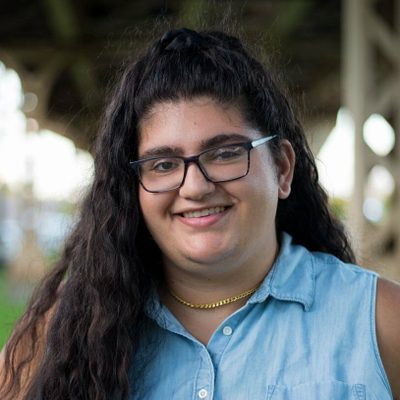
Yasmin Zacaria Mikhaiel (she/they) is a Chicago-based dramaturg, journalist and oral historian. Their multi-disciplinary work as a queer, fat, Iranian-American femme endeavors to amplify and archive stories that go lost, stolen and forgotten. Follow them @yasminzacaria.