Trump Has Made the U.S. War Machine a Spectacle—And It’s Spectacularly Unpopular
In Iran, Trump has brought the full extent of the war machine out into the open. Let’s channel public anger into organizing.
Khury Petersen-Smith and Azadeh Shahshahani

President Donald Trump’s unprovoked assault on Iran is the latest phase of a rampage in which the administration is making war and militarism central features of life in the United States. While the Pentagon’s violence has been unavoidable for many people around the world, it has largely been hidden from the view of most of the U.S. population. Not anymore.
The U.S. and Israel opened this war by launching attacks across Iran on the morning of February 28. Since the beginning of the bombing campaign, at least 555 Iranians have been killed, including well over 100 people — mostly girls — at a school in Minab. Iran is now following through on the retaliation that it promised, and has launched missiles toward at least six countries. At least six U.S. troops have been killed, and with Trump and Israeli Prime Minister Benjamin Netanyahu vowing to continue bombing, the war is escalating and expanding.
While brazen, aggressive U.S. military action in the 21st century did not begin with Donald Trump — the current president is simply bringing the unvarnished reality of U.S. militarism into the spotlight. By doing so, he has exposed the deeply unpopular and undemocratic nature of U.S. foreign policy. In this moment, antiwar organizers must seize upon this new awareness and outrage to build movements against escalating U.S. militarism.
Trump’s predecessors were more selective in exposing the public to the machinations of the war machine. For example, former President George W. Bush’s invasion of Afghanistan after 9/11, and his catastrophic “shock and awe” occupation of Iraq, were undertaken with extraordinary publicity, such as the speech that he gave under a “Mission Accomplished” banner a mere six weeks after the invasion of Iraq began.
But these highly publicized attacks were also conducted alongside covert wars in Pakistan and Somalia. Bush established a surveillance and policing architecture that targeted Muslims — both in the U.S. and around the world — but many of its operations were kept invisible to most Americans. Former President Barack Obama escalated and expanded the “war on terror” through drone strikes while attempting to conceal them from the U.S. public. During his presidency, Joe Biden largely maintained this approach.
Trump is bringing the brutality of U.S. militarism out into the open in the form of a spectacle—combining his expertise in shaping media narratives with his penchant for coercion through violence. But while Trump takes credit for creating the military capabilities that he is putting on display — contrasting himself with his “weak” predecessors — the United States’ capacity for the kinds of violence we are seeing both in our streets and on our screens was built up over decades by previous administrations and Congress’s implementation of vast “war on terror” policies.
In Trump’s meandering press conference following the U.S. attack on Venezuela and abduction of President Nicolás Maduro from Caracas, Chairman of the Joint Chiefs of Staff Dan Caine bragged that “the past two decades have honed the skills of our special operations forces,” which the Pentagon could draw on for “an unprecedented operation.”
“We leveraged our unmatched intelligence capabilities and our years of experience in hunting terrorists,” Caine said. “And we could not have done this mission without the incredible work by various intelligence agencies, including the CIA, NSA and [National Geospatial-Intelligence Agency].”
Bravado aside, there is truth in what Caine is saying: The Pentagon, the intelligence establishment, and police have been collaborating for decades. They have “learned by doing”: carrying out night raids, air strikes, abductions, and other violent actions across the Middle East, Central Asia, Africa, and elsewhere, in countless military operations in the post-9/11 wars. To a great extent this cross-collaboration was facilitated by bipartisan “war on terror” policies, such as the involvement of FBI agents in missions with special forces during the occupations of Afghanistan and Iraq.
Many of these activities were largely hidden from the U.S. public — no press conferences, no official announcements, no tweets. The Pentagon has been carrying out countless versions of what we witnessed in Caracas on a much smaller scale for two decades — bursting into Iraqi and Afghan homes with guns blazing and dragging people out in the night. Whatever U.S. leaders fed to the public was curated, such as the raid leading to Osama bin Laden’s assassination in 2011. If these capabilities, honed in the dark, were preparation for abducting Maduro, as Caine narrates, then the January 3 operation in Venezuela was their spotlight debut for the American public.
The seizure of Maduro from Venezuela is far from the only example of intentionally, highly visible military activity under the Trump administration. That assault — and the bombardment of Iran that followed weeks after — was the culmination of years of aggressive and devastating military actions. During Trump’s first term, the president was “very proud to” have dropped the biggest non-nuclear bomb in the U.S. arsenal on Afghanistan. In 2020, he assassinated Iranian Maj. Gen. Qassim Suleimani in Iraq by a drone strike.
Months after the second Trump administration took office, it bombed Somalia in what the Pentagon boasted was “the largest air strike in the history of the world.” Trump subsequently bombed Yemen for weeks. He joined Israel in its war on Iran and dropped massive bombs on that country in June 2025. Starting in September 2025, his administration conducted air strikes on fishing boats in the Caribbean as part of an alleged war against narco-trafficking, with at least 110 people killed by the end of the year. Trump ended 2025 by bombing Nigeria on Christmas.
In all of these cases, Trump posted on social media with bombastic language that dehumanized the people impacted by these attacks. When U.S. planes bombed Iran last summer, Trump inaccurately declared that the U.S. had “obliterated” Iran’s nuclear program. This is because the story Trump is telling is far more important to him than actual facts.
At home, he has deployed federal agents in fatigues with military-grade weapons to U.S. cities in order to round up immigrants and crackdown on dissent, paired with highly produced videos for social media. These actions have all been horrific. Central to his approach has been relating to overseas state violence not as a potential PR disaster for the public, but as a PR opportunity for his base — a celebration of weapons and the iron fist of the U.S. military.
Military operations abroad and brute force tactics by feds in our cities have, of course, not been invisible to everyone in the U.S. Many in communities with roots in the Global South have witnessed their countries of origin targeted by U.S. sanctions and military actions to devastating effect. And many people in Black, immigrant, and Muslim communities have experienced federal police agents conducting surveillance, kicking in doors, and abducting people before — and increasingly since — September 11, 2001.
But these actions, enabled by both Democratic and Republican administrations, largely involved a strategy of hiding them from the bulk of the U.S. population and underplaying them in any national conversation. While officials and whistleblowers occasionally brought these policies into light, these moments were few and far between. The practices were daily, but the conversations about them were rare. Activists worked to call attention to and resist these violent practices, but their campaigns were largely marginalized by the media.
Whistleblowers such as Chelsea Manning and WikiLeaks founder Julian Assange were able to temporarily bring the reality of U.S. imperial violence into the national conversation but were met with intense prosecution. And while some journalists carried out exceptional investigations, the U.S. news media largely complied with not asking too many questions as the government abducted people from around the world and tortured them in Guantánamo Bay, bombed countries in the Global South, and terrorized communities here — all in the name of “fighting terrorism” and stopping “criminal activity.”
Why does it matter that Trump is putting the horror of militarism on display for the U.S. population at large? For starters: Majority opposition to the U.S.’s “running” Venezuela; the fact that nearly 90 percent of Americans are against a U.S. invasion of Greenland; that nearly half of Americans opposed the attack on Iran before it even began and 59 percent of Americans now say they’re against the bombing campaign; and the widespread, fierce protest against the deployment of militarized, federal forces in Minneapolis, Los Angeles, Chicago, and elsewhere — all of which are enormous developments. This polling data represents reflect the abandonment of a strategy of manufacturing consent among the public in favor of energizing Trump’s base with unapologetic displays of state violence.
In fact, in Washington and Tel Aviv’s current bombardment of Iran, Trump has not felt compelled to persuade the public at all. He made no case to Congress, and he barely provided a justification, just videos posted to his social media account. He is appealing to the most war-loving section of his base, but sending a message to all of us: Military violence will be a fact of life, and you should get used to it.
This is why it is so important that we refuse to get used to it. Building on the outpouring of protest against U.S. support for Israel’s genocide in Gaza, it is critical that people in the U.S. are confronting Trump’s attacks — both domestically, in places like Minneapolis, and around the world. The challenge will be making sure that, as we oppose and resist Trump’s most egregious violations of domestic and international law — and people’s human rights — that we do not stop there.
By recognizing that these actions were built on a decade of bipartisan collaboration, we can reject the idea of returning to an imaginary peaceful past and become conscious of the need to resist all acts of injustice before they escalate into global catastrophes. Though Trump campaigned as an opponent of the post-9/11 wars, he is instead updating those wars for a new, more aggressive, and visible era. We need to dismantle the war machine in its entirety.
This story is being co-published with Truthout.

Get 10 print issues of our award-winning, worker-first journalism here!
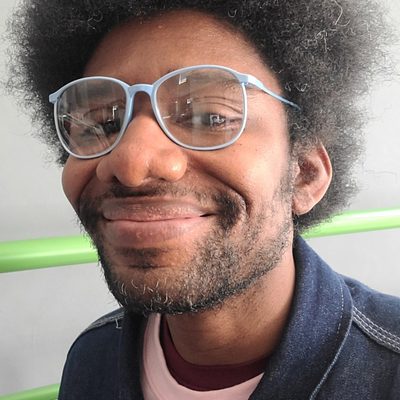
Khury Petersen-Smith is the Michael Ratner Middle East Fellow at the Institute for Policy Studies (IPS), researching U.S. empire, borders and migration.
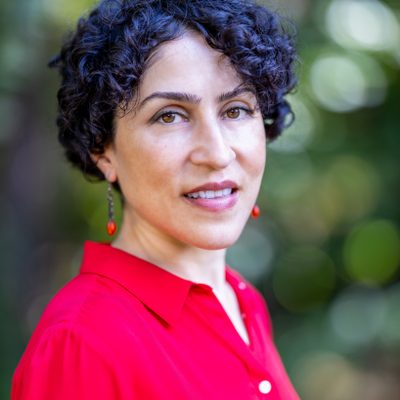
Azadeh Shahshahani is the Legal and Advocacy Director at Project South: Institute for the Elimination of Poverty and Genocide and a past president of the National Lawyers Guild.


