The Latest Crackdown on Pro-Palestinian Organizations
The Trump administration’s sanctions against Palestinian human rights organizations and ICC officials are the latest chapter in a long history of attacks against advocates aiming to hold Israel and the U.S. accountable.
Azadeh Shahshahani and Sofía Verónica Montez


Accusing human rights groups of terrorism has become one of the Trump administration’s most notorious strategies to attack civil society. And, as Palestine Legal and the Center for Constitutional Rights reported in 2024, the federal anti‑terrorism code has evolved around suppressing the Palestinian struggle for self-determination.
On December 18, 2025, U.S. Secretary of State Marco Rubio designated judges Gocha Lordkipanidze and Erdenebalsuren Damdin of the International Criminal Court (ICC) for sanctions. In its press release, the Department of State (DOS) accused the judges of “hav[ing] directly engaged in efforts by the ICC to investigate, arrest, detain, or prosecute Israeli nationals, without Israel’s consent.” The DOS contests that Israel is not subject to the ICC’s jurisdiction, so that such actions by the Court and its supporters are wrongful and punishable.
In contrast, the ICC claims its jurisdiction is legitimate insofar as it involves crimes committed within the State of Palestine, which formally acceded to the Court’s jurisdiction in 2015. This is so regardless of the nationality of the perpetrators, whether Israeli or otherwise.
Back in September, Secretary Rubio had also designated three Palestinian human rights organizations for these same sanctions: Al-Haq, the Al Mezan Center for Human Rights, and the Palestinian Centre for Human Rights (PCHR).
The three organizations are largely dedicated to monitoring Israeli forces in the occupied Palestinian territories (OPT). Al-Haq advocates to safeguard “the individual and collective rights of Palestinians in the OPT.”
Al Mezan focuses on self-determination efforts in the Gaza Strip by supporting “economic, social and cultural rights” of Palestinians.
And PCHR promotes a “democratic culture within Palestinian society.”
Rubio’s designations follow an executive order, “Imposing Sanctions on the International Criminal Court,” signed by President Donald Trump on February 6, 2025. It’s a response to the ICC’s investigations of the Israeli‑led genocide in Gaza and the ICC-issued arrest warrants for Israeli Prime Minister Benjamin Netanyahu and former Minister of Defense Yoav Gallant.
The sanctions against non-U.S. citizens involved in the ICC procedures include freezing of assets and restrictions or bans from entering the United States. Meanwhile, U.S. citizens substantially supporting such ICC procedures at home face fines of up to $1,000,000 and incarceration for up to 20 years under the International Emergency Economic Powers Act of 1977.
Soon after the designation, Al Haq reported suffering “frozen bank accounts, severed donor ties, and” loss of income for 45 staff members.
Throughout the last year, the administration similarly extended these sanctions to various ICC judges and prosecutors, as well as anyone supporting their efforts, such as legal scholars who provide education, training, analysis, and other services.
Notably, the sanctions expressly target Francesca Paola Albanese, United Nations (UN) special rapporteur on the occupied Palestinian territories. The DOS cited the Netanyahu and Gallant arrest warrants and Albanese’s recommendation for the ICC to investigate companies and executives providing support for the genocide as rationale for her targeting. Volker Türk, UN high commissioner for human rights, and Jürg Lauber, president of the UN Human Rights Council, urgently called for a reversal. Albanese, within her official mandate in service to the UN, is entitled to immunity from U.S. sanctions under the 1946 Convention on the Privileges and Immunities of the United Nations. Whether the United States will honor international law when push comes to shove remains uncertain.
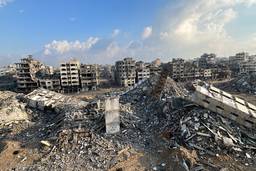
Undeterred, Albanese noted last September that 65,000 “Palestinians are certainly killed. She then added that “some scholars and scientists claim … the real death toll in Gaza” to instead approximate 680,000, including “380,000 infants under five.” Producing a precise death toll may prove impossible in the immediate future, given the vast destruction of Gazan infrastructure and mass population displacement. That said, the medical journal The Lancet noted in July 2024 that indirect deaths in recent armed conflicts — that is, deaths resulting not from firepower but from the ensuing spread of disease, destruction of medical facilities, starvation, dehydration, impediments in reaching safe havens, and the defunding of humanitarian aid – have “range[d] from three to 15 times the number of direct deaths,” so that interpreting an official death toll of 37,396 at the time to reflect an actual death toll of 186,000 would be far from unreasonable.
Unveiling the racket, Albanese submitted her findings to the UN Human Rights Council in 2025 in a report titled “From Economy of Occupation to Economy of Genocide.” Per her findings, industries across 8 critical sectors, from military technologies to agriculture and finance, have amassed significant wealth by investing in the displacement of native Palestinians and their replacement with Israeli settlers. Albanese urged the disruption of these industries profiting from the destruction of human lives and livelihoods.

As for Al-Haq, Al Mezan and PCHR, the DOS referenced their support for the ICC investigations as reason for sanctions.
The U.S. attacks against nongovernmental organizations (NGOs) mirror the blueprint outlined by Project Esther, a report created by the Heritage Foundation (the same group responsible for Project 2025), to crack down on pro-Palestinian organizing. Such U.S. policies chill advocacy for Palestinian liberation to further the Israeli colonization of Palestine, affording the United States greater military control across the Middle East.
The Israeli aggression benefits from billions of dollars’ worth of U.S. military aid every year. In the two years since October 7, 2023, the United States transferred upward of $16 billion in military aid to Israel, and a memorandum of understanding between the two states assures Israel a yearly 3.8 billion U.S. dollars through 2028. In all, the U.S. has gifted Israel nearly $250 billion for military support since 1946.
Within the past year, federal legislators have pushed for additional attacks against U.S. organizations advocating for a free Palestine. In March, Sen. Bill Cassidy (R-La.) opened an investigation against the DC-based nonprofit American Muslims for Palestine, for alleged “antisemitic violence,” particularly through its support of the college group Students for Justice in Palestine.
In August, Sen. Tom Cotton (R-Ark.) called on the IRS to investigate the Palestinian Youth Movement, another pro-Palestine organization with active chapters across the country, for alleged “support [of] terrorism.”
On June 10, the Treasury Department designated as a “terrorist” organization an NGO aiding Palestinians incarcerated by Israel, the Addameer Prisoner Support and Human Rights Association. It did so under a Bush-era executive order, which permits the federal government to freeze the assets of “specially designated global terrorists.” This same order was invoked in 2001 against the Texas-based Holy Land Foundation for Relief and Development, leading to its closure and a slew of criminal and civil charges against the organization and its officers.
Trump’s order to impose sanctions on the ICC is currently facing legal challenges, chiefly on content-based free speech grounds. In July 2025, the U.S. District Court for the District of Maine ordered a preliminary injunction barring the Trump administration from penalizing human rights advocates Matthew Smith and Akila Radhakrishnan in their support of ICC investigations of various situations across the globe.
Similar was the fate of a substantially identical executive order which had Trump signed in his first term. This old order had targeted Fatou Bensouda, then‑ICC prosecutor, as she investigated alleged crimes by U.S. officials and collaborators in Afghanistan. It was revoked by President Joe Biden, but its chilling effect on free speech arguably remains.
In fact, the United States has been consistently conditional in its relationship with the ICC. The United States has never ratified the Rome Statute—the treaty that established the ICC in 2002 to prosecute individuals for crimes against humanity. The Bush administration instead enacted the American Service-Members’ Protection Act (colloquially dubbed the “Hague Invasion Act”), authorizing itself to recover U.S. and allied personnel at the Hague by “all means necessary and appropriate.” The United States additionally signed bilateral immunity agreements with more than 100 countries to bar them from surrendering U.S. nationals to the ICC.
More recently, the Biden administration repeatedly vetoed UN cease-fire resolutions. Even as a U.S.-brokered cease-fire agreement went into effect October 10, reports promptly emerged of Israeli bombings in the Gaza Strip.
Across the pond, British authorities have arrested over 2,300 people protesting their government’s designation of the Palestine Action network as a terrorist organization on July 2025. By extension, support for the network has given way to criminal charges against its membership for supporting “terrorism.” The fact that the ongoing colonization of Palestine by Israel finds its roots in British colonialism merits mention, not least for its elucidation of present‑day Zionist policy by the United Kingdom.
In the face of such gargantuan repression, it is clear the grassroots shall continue to boldly resist. The continued escalation of state repression reflects a tacit acknowledgement that the state fears the power of the people standing united to demand justice, accountability and respect for human life.
In September, thousands of protesters gathered outside of the United Nations in New York to demand the arrest of Netanyahu, who was addressing the General Assembly to pitch “why Israel must finish the job.” Consistent with this bottom-up mandate, political figures from New York mayor Zohran Mamdani to Canadian Prime Minister Mark Carney have vowed to arrest Netanyahu should he step foot within their jurisdictions.
While the United States pulls back the curtain on the liberal farce of international accountability, people in Palestine and across the Global South are paying the price. Now is the time to vociferously condemn and counter this repressive U.S. project to quell grassroots mobilization.

Get 10 print issues of our award-winning, worker-first journalism here!
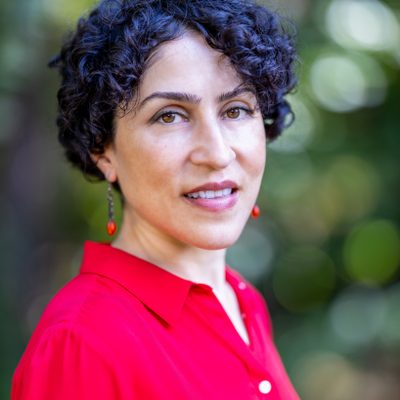
Azadeh Shahshahani is the Legal and Advocacy Director at Project South: Institute for the Elimination of Poverty and Genocide and a past president of the National Lawyers Guild.
Sofía Verónica Montez is a Staff Attorney at Project South.