The Hour Before Dawn
With the Voting Rights Act gutted and education under attack, building democratic power must reach beyond the ballot box—and into classrooms and the streets
Jesse Hagopian

In 1980, conservative strategist Paul Weyrich made a startling declaration during a speech in Dallas: “I don’t want everyone to vote.”
Weyrich, a leading strategist of the modern conservative movement and co-founder of the Heritage Foundation, explained, “Elections are not won by a majority of people. They never have been from the beginning of our country, and they are not now. As a matter of fact, our leverage in the elections quite candidly goes up as the voting populace goes down.”
Weyrich’s battles over political power did not end at the ballot box. He also saw education as a crucial battleground. In a 1999 op-ed, he claimed “political correctness” ruled schools and universities with “totalitarian ambitions.” His solution was for conservatives to build a “complete, separate, parallel structure” of “schools, universities, media, entertainment, everything.”
More than 40 years after Weyrich’s infamous voting remarks, Donald Trump has waged battles on these same two fronts. In 2020, on conservative talk show Fox & Friends, Trump warned that greater “levels of voting” would mean “you’d never have a Republican elected in this country again.” His administration has also sought to restrict what students can learn, threatening to withhold federal funding from schools that teach about systemic racism in ways it opposes and attempting to prohibit DEI programs in schools. Trump has simultaneously worked to dismantle the Department of Education while directing more public money toward private schools through voucher programs.
The message is clear: Limit who can exercise democratic power in the present, and limit what people learn about how previous generations expanded it.
The Supreme Court’s decision in Louisiana v. Callais represents the latest chapter in a centuries-long effort to restrict political participation whenever it threatens the existing distribution of wealth and power. The tactics have changed — from literacy tests and poll taxes to racial gerrymandering and voter suppression laws — but the goal of limiting political participation remains.
The case began when Black voters challenged a Louisiana congressional map that created just one majority-Black district out of six, despite Black residents making up nearly one-third of the population. A federal judge found that the map likely violated the Voting Rights Act by diluting Black voting power, prompting the Republican-controlled legislature to draw a second majority-Black district. But a group of self-described non-Black voters challenged the new map, arguing that creating the second majority-Black district amounted to unconstitutional racial gerrymandering.
In a 6 – 3 decision on April 29, the Supreme Court struck down the new map and effectively gutted Section 2 of the Voting Rights Act, which prohibits racial discrimination in voting. As voting rights journalist Ari Berman explained, the ruling served to “effectively kill the last remaining tool of the Voting Rights Act,” following earlier Supreme Court decisions in 2013 and 2021 that weakened its protections.
The consequences have reshaped the 2026 midterm elections. Following Callais, Republican-controlled legislatures in Louisiana and Tennessee redrew congressional maps to eliminate majority-Black districts, including the district representing much of Memphis.
In Alabama, the Supreme Court allowed the state to use a map that eliminated a second district in which Black voters had an opportunity to elect their preferred candidate. Florida enacted a new congressional map designed to shift four Democratic-leaning districts toward Republicans. Meanwhile, a federal appeals court in Georgia overturned a 2023 ruling that the state’s electoral maps discriminated against Black voters, ordering the case reconsidered under the new, more restrictive standard. With additional redistricting battles already taking shape for 2028, the struggle over who gets to exercise political power is far from over.
In her dissent, Justice Elena Kagan warned that “The Voting Rights Act is — or, now more accurately, was — one of the most consequential, efficacious and amply justified exercises of federal legislative power in our nation’s history.”
The Callais decision arrives amid a broader assault on democracy. Across the country, lawmakers are redrawing electoral maps to dilute Black and brown political power, erecting new barriers to voting, attacking independent election administration, criminalizing voter registration efforts and undermining public confidence in elections themselves. These attacks are part of a broader effort to prevent the vast majority of people from exercising meaningful political power.
But democracy is about more than casting a ballot every few years. It depends on people having the freedom to learn, deliberate, organize, protest, advocate, and govern collectively. Achieving a democratic society requires a public empowered to decide not only who holds political office, but also how to govern the wealth, resources and institutions created by our collective labor.
It’s no wonder then why attacks on voting rights and education so often travel together. Limiting teachers’ ability to show students how social movements have expanded democratic rights and challenged concentrated political and economic power constrains the possibilities people can imagine for the future.
As veterans of the Student Nonviolent Coordinating Committee (SNCC) warned in their response to the Callais decision, these attacks are part of a long historical effort to “control the vote. Control the outcome. Control the future.” Few people are better positioned to remind us why. SNCC organizers risked — and, in some cases, gave — their lives to secure the right to vote.
But “voting alone has never been sufficient,” they said. The movement that won the Voting Rights Act never imagined democracy as something that happened only every few years inside a voting booth. Voting mattered because it was one tool — among many — that ordinary people could use to build democratic power. As the SNCC veterans explained, movements must also “build power beyond” the vote through organizing, coalition building, political education and institutions capable of challenging unjust laws and holding those in power accountable long after Election Day. Voting rights have never been gifts handed down by enlightened leaders. They were victories won through collective struggle.
During Reconstruction, formerly enslaved Black communities and their allies fought to transform emancipation into political power. Their organizing helped secure the 15th Amendment in 1870, prohibiting states from denying the right to vote based on race. Reconstruction demonstrated that voting rights were inseparable from broader struggles for public education, economic opportunity, safety and full participation in society.
For a brief period, the United States moved closer to becoming a multiracial democracy. Black voters helped elect Black legislators across the South, establish public schools, expand public services and reshape political life. Yet Reconstruction was ultimately defeated by a campaign of racial terror and political reaction led by former Confederates and their allies.

Today’s battles over voting rights are the latest manifestation of that counterrevolution.
Nearly a century later, the Civil Rights Movement launched what many historians have called a Second Reconstruction.
In 1964, SNCC helped lead the Mississippi Freedom Summer campaign through the Council of Federated Organizations, a coalition that brought together SNCC, the Congress of Racial Equality, the NAACP, and the Southern Christian Leadership Conference. Alongside thousands of Black Mississippians who had been organizing for years, they built Freedom Schools, organized voter registration drives, developed local leadership and helped establish the Mississippi Freedom Democratic Party to challenge the state’s all-white Democratic delegation. They faced bombings, beatings and jail cells, and the murders of James Chaney, Andrew Goodman and Michael Schwerner.
Yet the movement persisted.
Freedom Summer helped expose the brutality of Jim Crow to the nation and laid crucial groundwork for passage of the Voting Rights Act of 1965. But its lessons extended far beyond voting.
Freedom School students studied Black history, examined social inequalities, debated current events and imagined a more democratic future. Organizers recognized that people needed not only the right to vote but also the knowledge, confidence, and political understanding necessary to exercise power.
Reflecting on the movement decades later, SNCC veteran Courtland Cox explained that the struggle was never simply about access to the ballot. Rather, it sought to create “space for millions of Americans to participate in the political and economic life of this country.”
Voting rights are about more than elections. They are about who has the power to shape the conditions of their lives. They are connected to struggles for quality schools, affordable housing, healthcare, labor rights, clean air and water, public investment and economic justice. This is precisely why attacks on voting rights are so often accompanied by attacks on education.
Those seeking to restrict popular power understand the power of history education and see it as dangerous. When students learn about Reconstruction, they discover that formerly enslaved people fought to dramatically expand democratic rights in a nation that had never lived up to its democratic claims. When they learn about Freedom Summer, they discover that ordinary people challenged systems of oppression that seemed permanent. When they learn about the Civil Rights Movement, they discover that rights are rarely granted voluntarily by those in power; they are won through, as SNCC puts it, “courage, radical imagination and readiness to act.”
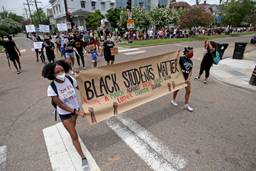
If young people understand these histories, they may begin to see themselves not simply as spectators to politics but as participants in shaping the future. That is precisely why educators must refuse to lie about the past and teach honest history about the Black Freedom Struggle and movements for collective liberation. Through the growing Teach Truth movement, educators, students, and communities across the country are organizing against book bans and curriculum censorship. Teachers are refusing to surrender to laws and political intimidation designed to erase the history of systemic racism and its enduring impact on American society. Instead, they are teaching the truth about the long struggle for voting rights and the grassroots movements that challenged slavery, segregation, and racial injustice. They are helping students understand that democracy has never simply been handed down from above. It has been expanded by ordinary people organizing together to demand it.
Paul Weyrich’s call for a “complete, separate, parallel structure” of schools and media lives on in today’s MAGA movement, with its push for school privatization through charter schools and private school vouchers while restricting the teaching of systemic racism in public schools. Yet decades before Weyrich’s declaration, SNCC and other Freedom Summer organizers had built their own parallel institutions from below — not to privatize public education, but to challenge the segregation and white supremacy of Mississippi’s schools and society. The irony is striking: Today’s MAGA movement champions alternatives to public schools while seeking to suppress the alternative education that SNCC’s Freedom Schools were created to provide — teaching that white supremacy can be challenged, that ordinary people can transform society and that education should empower young people to fight for a more democratic world.
In this time of rising authoritarianism, the lessons of SNCC veterans are vital. “We have seen darker nights than this one,” the SNCC veterans’ response to Callais reminds us, but “we do not pretend that this moment is ordinary.”
This metaphor from SNCC veterans is a fitting one for our own time:
Yes, it is late, and it’s dark outside. But it is 3 a.m. This is the hour when the body is most vulnerable. The hour when the future feels uncertain. The hour when many lose their way. But it is also the hour before dawn. A new world isn’t guaranteed. But it is possible. And it’s already being imagined, organized and fought for.
The hour before dawn has never belonged to spectators. It has always belonged to those willing to organize despite uncertainty and to imagine a freer society before it seems possible. That is the inheritance the veterans of SNCC have entrusted to us.
Jesse Hagopian is a Seattle educator, an editor for Rethinking Schools magazine, a founding steering committee member of Black Lives Matter at School and serves as the director of the Teaching for Black Lives Campaign for the Zinn Education Project. Jesse is the author of the forthcoming book from Haymarket Books, Teach Truth: The Attack on Critical Race Theory and the Struggle for Antiracist Education, editor of More Than a Score: The New Uprising Against High Stakes Testing, and the co-editor of the books, Teaching for Black Lives, Black Lives Matter at School and Teachers Unions and Social Justice.