Fortress Yellowstone
The ultra-rich are fortifying themselves inside one of America’s last intact ecosystems—with money plundered from ecological sacrifice zones around the world
Joseph Bullington


Listen to Joseph Bullington read this article
SANTARÉM, BRAZIL — The taxi judders uphill into a forest brimming with life. Palm fronds droop over the road like huge, oily hands, and green birds flap between trees. And then, abruptly, the forest ends, and we emerge onto a denuded plain where the sun beats down on road and car and red dust.
I am here to see firsthand how the ultra-rich are remapping the Earth’s remaining wild places, deciding what is sacrificed and what is conserved and for whom.
For me, this road into the Brazilian Amazon began a few weeks prior and nearly 5,000 miles away, on a different dirt road through a sprawling Montana ranch.
I had followed that county road up through creek bottoms onto a rolling plateau of rangeland, where the southern front of the Crazy Mountains filled the windshield. I stopped the truck and stepped out into the quiet.
Half an hour had passed since I’d heard an engine besides my own or seen another human being. Other life-forms predominated. Whitetail deer down by the creek. Up here, knots of pronghorn antelope. A pair of kestrels hunted methodically across the prairie. In the distance, forested foothills hid untold creatures: elk, black bear, moose in the low country and mountain goats in the high, grouse, woodpeckers, lynx, fox and, maybe, in the alpine reaches, even a wolverine or two.
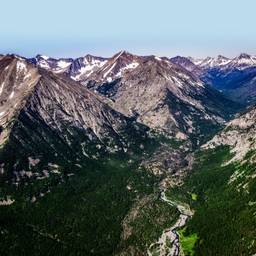
Or maybe a grizzly bear. One had been sighted not too long ago near the Crazies, which lie on the northern edge of the Greater Yellowstone Ecosystem, home to one of the few remnant populations that have found refuge from all-out extermination in the lower 48 states. Even the faintest possibility of encountering one of these rare and powerful beasts was enough to imbue the mountains ahead with spine-tingling mystery.
But the road ended there for me, according to two bright “No Trespassing” signs that blocked the way. The wild terrain that beckoned from beyond them was for the exclusive enjoyment of the ranch’s owners and their chosen guests.
Wild Eagle Mountain is one of a growing number of billionaire-owned ranches in the Greater Yellowstone Ecosystem, which encompasses some 12 million to 22 million acres (depending on how you measure) and supports the largest concentration of wildlife in the contiguous United States. As such places grow increasingly rare—a 2021 study estimated that only 3% of the Earth’s land area retains all of the species that lived there 500 years ago — proximity to Yellowstone has become an increasingly valuable commodity. In recent years, the ultra-rich have been buying up slopeside mansions, frontage on trout rivers and great swaths of land here in one of the last nearly intact ecosystems left on Earth. And it’s not only in Montana: This influx of wealth has made Teton County, Wyo. — on the other side of this ecosystem — the richest and most unequal county in the United States.
To understand the scale of this transformation, I analyzed land ownership data for Park and Sweet Grass counties, an area at the heart of Montana’s Greater Yellowstone country. In these counties — which contain Paradise Valley, parts of three mountain ranges and a main entrance to Yellowstone National Park — I found the landscape dominated by out-of-state wealth: seven of the counties’ 10 largest landowners are ultra-rich investors and industrialists who own their vast tracts through a maze of LLCs registered in Montana, Texas, New Jersey, Washington and California. An eighth property tracks to a Boston-based financial services firm with “over 50 years of experience serving the needs of high net worth individuals and families,” according to its website. But I could not determine who the property’s actual owner is. (The firm, Paul | McCoy Family Office Services, did not respond to phone calls or emails requesting comment.)
Some of these ultra-rich ranch owners celebrate the natural beauty of their land and are ardent conservationists when it comes to the Yellowstone ecosystem. In digging into their business dealings, however, I found that most of these landowners accumulated their wealth through industries that help drive the destruction of nature elsewhere. Their ranks include private equity investors, oil and gas billionaires and real estate developers.
Take, for example, Russell Gordy, the largest landowner in the two-county area. When Gordy consolidated several smaller landholdings into his 44,000-acre Rock Creek Ranch, he swore off the idea of ever subdividing or developing it. “They don’t make land like that anymore,” he told the Plainview Herald in 2002. Later, when he sued his neighbors to stop them from building a wind farm, Gordy railed in a court affidavit against “industrializing the Yellowstone Valley.”
But Gordy made his billions industrializing other landscapes — drilling hundreds of wells for coalbed methane in the San Juan Basin of New Mexico and Colorado, fracking shale gas in Colorado’s Thompson Divide, collecting royalties from a mineral lease for a massive coal mine in southern Illinois.
Arthur Blank, the area’s second-largest landowner, also couched his two-decade ranch-buying spree in the language of environmentalism, and he placed some of his land in conservation easements to protect its habitat in perpetuity — a move that won him applause from local conservationists.
But Blank made his billions as the co-founder of Home Depot, the largest distributor of lumber in the United States and a company that environmental campaigners have targeted over the decades for its role in old-growth logging and forest degradation worldwide.

Then there is the MacMillan family, whose Wild Eagle Mountain Ranch is the third-largest landholding in this part of Montana. When they joined Gordy in suing to stop a planned wind farm on a neighboring ranch, they argued it would “despoil one of the most spectacularly beautiful areas in the world.”
The family’s wealth, however, comes from their ownership stake in Cargill Inc., the food and agribusiness giant that dominates global supply chains for commodities like wheat, corn and soybeans, and whose profits have come at great cost to people and ecosystems around the world. In Brazil, the group Mighty Earth ranks Cargill in the top three companies “worst for deforestation,” linking it to the destruction of more than 500 square miles of tropical forest in just two years, between 2022 and 2024.
After seeing what I could of the MacMillans’ Yellowstone ranch — after watching pronghorn antelope graze across its sagebrush prairies backed by forested mountains, after sampling the chokecherries growing along one of its creeks — I wanted to see the land where Cargill makes its money. So I bought a ticket to the Brazilian Amazon and, a few weeks later, found myself in the back seat of a hired car traveling toward Açaizal, a remote Indigenous village.
Açaizal — pronounced ah-sah-ee-ZAL — sits on the Planalto Santareno, what was once a largely unbroken plateau of tropical rainforest perched above the city of Santarém and the confluence of two rivers so vast they almost defy the category — the Amazon and the Tapajós. But when we climbed onto the planalto, I could barely see any forest at all.
Outside the car windows, fields of barren red earth unfurled for miles beneath the glare of the Amazonian sun. These manufactured deserts ended abruptly against dark, squared off walls of the forest from which they were carved. In the growing season, these fields, which dominate the planalto, produce soybeans and corn in rotation, largely animal feed for export to Europe and Asia. When I visited, in October 2025, the only signs of life were some roadside weeds, the broken gray stalks of harvested corn and the occasional lone figure of a Brazil nut tree, illegal to cut under Brazilian law and a reminder of the kind of forest and foodways that lived here before the onslaught of monocrop agriculture.
What connects these two landscapes — the Yellowstone ranch with the Planalto Santareno — is the fact that Cargill is driving the obliteration of the planalto’s mosaic of tropical forest and small farms to make way for industrial soy plantations. Put simply, the Planalto Santareno is one of the places where the Cargill-MacMillan family extracts its momentous wealth. Wild Eagle Mountain Ranch is one of the places where it stores and enjoys it.
Whitney MacMillan, great-grandson of Cargill Inc. founder William Wallace Cargill, bought his first Montana ranch a few years after he took over as chairman and CEO of the family business, in 1977.
During his tenure, MacMillan oversaw the company’s dramatic global growth, expanding its operations from 31 countries to 53. In Brazil, Cargill got into the sugar and cacao businesses and built infrastructure for processing and shipping soybeans, including a facility in the central state of Mato Grosso in 1986. This positioned the company well for what turned out to be a major boom. New seed varieties and soil amendments — particularly lime, to neutralize the acidic soils of Mato Grosso’s tropical savannas and forests — opened the door for industrial soy production in a region where it had been thought impossible. Between 1980 and 1996 (the year after MacMillan retired as CEO), the area of Mato Grosso under soy cultivation grew by nearly 3,000%, boosted by tropical growing seasons and ample rain.
Cargill’s global expansion paid off: Under MacMillan’s watch, the company’s revenue more than tripled in 10 years, and it grew into the largest grain company in the world. It paid off for MacMillan, too. After a few years at the head of the company, he and his wife, Elizabeth, had the means to fulfill his childhood dream of owning a ranch, and they didn’t go small. In 1979, they purchased 20,000 acres in the foothills of Montana’s Crazy Mountains and named it Wild Eagle Mountain Ranch.
After MacMillan retired in 1995, Cargill continued to expand in Brazil and around the world. Profits continued to flow to the family, who remained majority owners — making Cargill the largest private company in the world and filling the ranks of the Cargill-MacMillans with more billionaires than any family on Earth. In the 1990s, MacMillan became co-owner of another ranch, this time on Montana’s northern prairie. His cousin, Austen S. Cargill II, bought a 9,300-acre spread in Paradise Valley in 2001.
Neither Cargill Inc. nor the MacMillan family (via representatives of the LLC that owns Wild Eagle Mountain Ranch) responded to interview requests or detailed questions from In These Times.
Today, the agribusiness giant shows no sign of slowing its accumulation: In fiscal year 2025, it paid out a company-record $1.5 billion in profits to its owners, in part because of increased soy and corn exports from Brazil.
For the MacMillans, Wild Eagle Mountain offered a retreat from the fast-paced world of global business. Up until only a few years before he died — at age 90 in 2020, leaving the LLC that owns the ranch in Elizabeth’s name — MacMillan enjoyed fly fishing in the ranch’s creeks, particularly for native Yellowstone cutthroat trout. That’s according to journalist Amy Gamerman, whose 2025 book, The Crazies, chronicles the successful effort by Wild Eagle Mountain Ranch, Gordy and other wealthy landowners to stop the proposed Crazy Mountain Wind project.
“Although he didn’t have much patience for greenies, as he called environmentalists,” Gamerman writes, “MacMillan really did care about the Yellowstone cutthroat trout.” In 2007, he met with a biologist from Montana Fish, Wildlife and Parks, according to agency documents, to discuss “opportunities to promote Yellowstone cutthroat trout” on his ranch, where “Mr. MacMillan has a long history of improving habitat quality.”
“Whitney MacMillan was a conservative in the literal sense,” writes Gamerman. “He wanted to keep the place the way he found it, and he had found it with those Yellowstone cutthroat trout.”
When he looks back, Cacique (chief) Manoel Mundurukú sees 2007 — the same year Whitney MacMillan was talking creek conservation with a state fisheries biologist — as a turning point for the Mundurukú people, as industrial soy plantations closed in on their territory.
We are sitting by the Igarapé Açaizal, a creek that runs through the village of Açaizal in what is left of the Mundurukú territory of the Planalto Santareno. (Like many Indigenous people in the Amazon, Manoel uses the name of his tribe as a surname.) The Mundurukú used to fish and do laundry and swim here, Manoel tells me, until deforestation for soy plantations dewatered it. Runoff from the soy and corn fields has poisoned what water is left, he says. Most of the fish are gone.
Nearby, Manoel introduces me to Edno Mundurukú, an elder who has lived in the territory all his life. (Both men speak to me in Portuguese, through a translator.) When he was a kid, Edno tells me, it was all forest. He gestures to encompass the world in every direction from where he sits in a hammock outside of his cinderblock house.
“Só mato,” he says. “Only forest.”
Edno describes a typical day in the life of the Mundurukú when he was young: “If you wanted fish for lunch, you went to the river. If you wanted meat for dinner, you went to the forest.”
The forest where they hunted also offered fruits and nuts in abundance, including açaí, the purple fruit of the açaí palm. In those days, Edno explains, the Mundurukú moved seasonally as different fruits ripened, living for a time in each of four villages — including here in Açaizal, which translates to “Grove of Açaí.”

And, of course, there was mandioca. Called by many different names in the different lands where it has become a staple food crop — yuca, manioc, cassava — this plant with starchy, yam-shaped roots is indigenous to the southern Amazon, where it was domesticated more than 10,000 years ago. Across the yard from where Edno and I are talking sits a heavily used mandioca mill and griddle. Similar griddles are among the oldest artifacts archaeologists have unearthed in the Amazon.
“That’s why they thought the Indigenous were lazy,” says Edno, chuckling. “Because we didn’t have to work for other people to make a living.”
Now, instead of forests full of fruits and animals and mandioca clearings, industrial soy plantations press in on Açaizal like a closing fist. There is no escape from the onslaught of monoculture. Manoel shows me where rows of broken cornstalks run right up against the edge of the community’s soccer field, which the soy farmers also want to plow. The soybeans and corn, like those in the United States, are genetically engineered to withstand the herbicides and pesticides the farmers dump on them to beat back weeds and pests, but the chemicals drift, says Manoel, making it impossible to grow fruits and vegetables and mandioca nearby. The streams run low and full of poison.
Now, for dinner, we eat store-bought fish with store-bought rice.
What unleashed this cataclysm on the Mundurukú was a quiet tick in the global economic system, perhaps a figure on a balance sheet, that convinced the leaders of Cargill they could increase their profits by building a port in the city of Santarém to export soybeans and corn to feed factory-raised pigs and chickens and feedlot cattle in Europe and Asia.
Once Cargill opened the port, in 2003, planting soy suddenly became profitable in the Amazon forests of the northern state of Pará, where the crop had been virtually unheard of. Industrial soy plantations exploded across Amazonia as farmers rushed to buy up land. Some cleared rainforest for soy, while others converted small farms or cattle pasture, pushing forest-clearing cattle ranches farther into the forest frontiers of Mato Grosso and Pará. The year Cargill’s port opened, Brazil’s Amazon biome saw more than 11,400 square miles of native vegetation cleared — the highest level of deforestation recorded since 1987, when MapBiomas, a multi-organizational mapping initiative, began tracking it.

On the Planalto Santareno, the process played out in
microcosm. In 2000, less than a quarter mile of soy was growing in the
municipalities that make up the planalto. By 2024, that number surged to
almost 400 square miles, according to MapBiomas. In that same time, the planalto’s forest cover shrank by more than 660 square miles.
After a Greenpeace-led campaign, Cargill and other major soy traders agreed to stop purchasing soy from land in the Amazon deforested after 2008. But the Soy Moratorium agreement, as it came to be known, did not cover Brazil’s vast tropical savanna, known as the Cerrado, where deforestation surged. Nor did it entirely protect the Amazon rainforest, where monitoring groups have documented extensive violations. But the Soy Moratorium did drastically slow the rate of direct, soy-driven deforestation in the Amazon biome, says Lisa Rausch, a scientist at the University of Wisconsin-Madison who researches deforestation in Latin America.
In January, however, an industry group that represents Cargill and other major soy traders announced it is pulling out of the Soy Moratorium.
Without the agreement, says Rausch, “There will for sure be more deforestation associated with soy.”
On the planalto, the expansion of industrial soy has not only stripped the land of its forest but of its traditional human inhabitants, who find themselves increasingly unable to farm as agrochemicals poison their crops and waterways. This includes Indigenous groups like the Mundurukú, but also quilombola communities (descendants of Africans who escaped slavery) and non-Indigenous peasant farmers.
“Once their streams are polluted, they cannot live in the community anymore,” explains Maria Ivete Bastos dos Santos, president of the Union of Workers and Rural Workers of Santarém, through a translator. “You can’t raise chickens, go fishing, do laundry. … They used to grow rice and beans. Now, they have to go to the market to buy rice. … The most important crop is mandioca.When the time comes you can’t grow mandioca, the community cannot survive.”
Many communities have not survived. A recent study of farming on the planalto found the arrival of the Cargill port and industrial soy has led to the concentration of land in the hands of big, well-capitalized soy farmers, many of whom arrived from the south of Brazil to take advantage of the cheap land, government subsidies for export crops, and financing and shipping opportunities offered by Cargill. Small farmers, the report found, were pressed to sell their land for cheap or expelled from it, leading to “the disappearance of entire communities.”
Cargill Inc. did not respond to detailed questions about allegations that Cargill has driven destruction and displacement on the Planalto Santareno and in the wider region. The company’s Brazilian website says its Santarém facility contributes to “Brazilian agribusiness and the sustainable development” of the region. A 2018 Cargill press release, celebrating the anniversary of its arrival in Santarém, points to the port’s creation of 400 direct and 270 indirect jobs.
But what Cargill hails as “development” has brought only harm for locals, Bastos dos Santos says. People who didn’t need jobs to make a living, because they had the land, now have neither land nor jobs.

Many of the displaced people, she says, migrate to the “the peripheries of the city” of Santarém. Because there are no farming jobs, she says, some turn to crime and prostitution.
“This, as well,” she says, “is one of the impacts of the soybeans.”
As for the Mundurukú, some have already been displaced. Others remain determined to hold onto the territory. It is a constant fight, says Josenildo Mundurukú, a cacique and a math teacher at Açaizal’s Indigenous school.
The soy farmers, Josenildo tells me through the translator, covet what’s left of the Mundurukú territory. They constantly expand their fields, little by little, and only through constant vigilance and resistance can the Mundurukú hold back the tide of soy. This leads to conflict and threats of violence. He speaks of drones used to monitor the Mundurukú leadership and pickup trucks full of armed men who follow them down the dirt roads around Açaizal.
Josenildo concedes Cargill neither owns the farms nor participates in the efforts to push out the Mundurukú, but “Cargill is the head chief of the destruction,” he says. “Cargill is responsible for the death of the people in Mundurukú territory, for the death of the territory itself.”
As communities in the Brazilian Amazon have been uprooted in the name of development, a parallel process of upheaval and displacement has unfolded in another of the world’s remaining wild places.
The MacMillans’ 1979 purchase of Wild Eagle Mountain Ranch placed them early among what became a torrent of ultra-rich buyers hungry to own a piece of Yellowstone. This rapid influx of wealth has transformed parts of the rural West that were, not so long ago, frontier hinterlands characterized by ranching, railroading and natural resource extraction into centers of extreme opulence characterized by luxury mansions, mountain side golf courses and so-called natural amenities.
“What’s happening now in this part of the world is wealthy people are trying to buy up large swaths of land and turn them into exclusive resorts,” says Mike Clark, a renowned social and environmental activist. He calls the phenomenon “Fortress Yellowstone.”
In 2001, Clark ended his first of two stints as director of the Greater Yellowstone Coalition, a prominent conservation group, with a farewell speech warning against the burgeoning myth of“a noble, almost heroic, Fortress Yellowstone, where those who can afford to live and play here can escape the pressures and problems of modern life.”
The allure of escape is easy to understand: Escape from cities where the nearest hope of seeing a wild deer lies in an hours-long drive down traffic-clogged freeways. Escape from the monocrop corn empire of Midwestern industrial agriculture with its nitrate-poisoned rivers and cancer clusters. Escape from municipal water supplies abounding with forever chemicals. Escape to a place with clean air and clean water and healthy wildlife populations, where you and your family — and your assets, of course — just might be able to weather the ravages of unabated climate change.
“The idea of Fortress Yellowstone is, for the wealthy, very appealing,” Clark tells me.
Once I’d dug the owners’ names out from behind the LLCs, it
was startling to see how the area’s prominent land features have been
encompassed by the ranches of the very rich and sometimes famous. Leave
Yellowstone National Park and drive north into Paradise Valley, for
example, and you pass through the empire of ranches owned by billionaire
Arthur Blank, cofounder of Home Depot. Around the town of Pray, the
landscape west of the road becomes the sprawling domain of oil and gas
billionaire Trevor Rees-Jones.
In the Crazies, if you head east from Wild Eagle Mountain, you pass a ranch owned by David Leuschen, a billionaire private equity magnate whose portfolio has included coal-fired power plants and oil companies, and whose 160,000 acres of ranchland sprawl across several Montana counties and into Wyoming. Keep going and you encounter the sixth-largest spread in the two-county area, owned in part by an entity called Crazy Not To LLC and associated with Tim Conver, former CEO of arms manufacturer AeroVironment.
On the other side of the Crazies, past Russell Gordy’s
extensive Rock Creek Ranch, lies the Crazy Mountain Ranch, acquired in
2021 by an investment fund called CrossHarbor Capital Partners. The
Montana Department of Natural Resources and Conservation recently sued
the ranch for illegally diverting water from Rock Creek to irrigate a
300-acre golf course created to take “full advantage of the exceptional
mountain views, aspen groves and wide open spaces that surround the Ranch.”
CrossHarbor also owns the hyper-exclusive resort called the Yellowstone Club in Big Sky, Mont., which counts among its members Bill Gates, Tom Brady and Justin Timberlake, as well as right-wing financier Bill Ackman and Interior Secretary Doug Burgum, who hosted a fundraiser there for Donald Trump’s 2024 presidential campaign. Tickets reportedly started at $100,000.
In These Times reached out to Gordy, Leuschen, Rees-Jones and Conver about their property holdings but did not receive a response. A representative for CrossHarbor did not respond on the record to emailed questions.

An escape to Yellowstone is not for everyone, of course. Increasingly, it’s not even for the people who already live here. As I’ve reported previously, the wealth pouring into Yellowstone is driving a wave of rapid gentrification that’s ripping people from the land they love.
As housing prices surge, some longtime locals see their property taxes soaring beyond their fixed incomes, while others watch their hopes of ever owning a place in their hometown recede into impossibility. Many have left. Others stay and live in their cars. The rate of homelessness has skyrocketed.
Once, even the lowest-wage workers here could maintain deep relationships with the land through hunting, fishing, hiking and picnicking. Now, the workers who power the area’s tourism and leisure economy find themselves straddling the widening gap between rising rents and stagnant wages, working longer hours and commuting longer distances from far-flung apartments, trailer parks and campsites. The hustle to survive here dominates their waking hours and leaves little time to get out into the mountains. Even when they get a break, the proliferating scourge of “No Trespassing” signs blocks ever more favorite fishing holes, hunting areas and hiking trails, as selling exclusive access has become a profitable market.


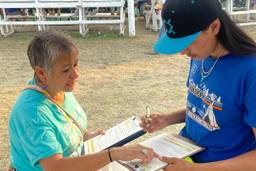
The billionaire fascination with playing cowboy also has consequences for actual cowboys. That’s according to Keegan Nashan, 32, who knows the wealthy takeover from two sides. For one, she’s a firebrand organizer who runs the Instagram account “F*ck the Yellowstone Club,” with more than 2,000 followers. (For comparison, about 10,000 people live in the county.) She also has to make a living, so she has worked as a caterer, which has taken her behind the scenes of many of these trophy ranches and the Yellowstone Club itself.
To illustrate her point, Nashan tells me about a young guy she knows who grew up in an ag family and who raises “roughstock” — that is, the broncs other people (other than me) try to stay atop at rodeos. With rangeland prices driven through the roof by the luxury real estate rush, beginning ranchers and farmers like her friend can’t even dream of having a place of their own.
“The possibility of that being a lifestyle is dead,” Nashan says. “That is the consequence of the billionaires purchasing all this land.”
The term Fortress Yellowstone nods to the concept of “fortress conservation,” a model that, in the United States, has spawned everything from the National Wildlife Refuge system to the Wilderness Act. Yellowstone National Park itself serves as one of fortress conservation’s best and earliest blueprints. The model aims to protect biodiversity by limiting human presence in an ecosystem because, in this view, humans are fundamentally separate from and destructive to nature. In Yellowstone, fortress conservation has meant the exclusion of the market hunters who decimated the buffalo elsewhere but also the forced removal of the Shoshone, Bannock and other Indigenous peoples.
These days, fortress conservation can conveniently mesh with the desire of the wealthy for privacy, exclusivity and profitable ways to invest. As Justin Farrell points out about Teton County, Wyo., in his 2020 book, Billionaire Wilderness, when the ultra-rich put their land in conservation easements to prevent development, they not only conserve ecological value but ensure they’ll never have any neighbors. They also contribute to the scarcity of buildable land and, consequently, increase the value of their own houses.
A similar process has played out across Yellowstone at landscape scale, as some local conservation groups have effectively allied with ultra-rich landowners to defend the fortress.
In 2019, when Arthur Blank purchased his third of four Paradise Valley ranches and put it in a conservation easement, he vowed to preserve the lands “in their original, intact state for the sake of beauty and wildlife.” Blank has also contributed more than a million dollars to local conservation groups which have organized campaigns to defeat a pair of proposed gold mines and other industrial projects that could mar Paradise Valley, where the onslaught of wealth is driving the non-rich out.
The benefit of all of this conservation, in other words, is enjoyed by an increasingly elite few.
Blank declined to be interviewed for this story, but a representative for his holding company, AMB West, emailed a statement that reads, in part, “Mr. Blank’s long-standing commitment to environmental and conservation-related initiatives is well documented. To date, the Arthur M. Blank Family Foundation has given over $137 million in total grants across the state of Montana, including support for rural and indigenous communities outside of the Paradise Valley area.”
The spokesperson did not respond to questions about the environmental legacy of Home Depot and noted that Blank is no longer in a leadership role at the company. A spokesperson for Home Depot pointed In These Times to public overviews of its sustainable forestry efforts.
Meanwhile, the destruction continues beyond the bounds of Fortress Yellowstone. In fact, the value of conservation zones like Yellowstone grows in a sort of perverse correlation with the expansion of their opposite, the areas of the planet that the powerful deem not worth conserving — the resource extraction zones they feed into the furnace of the global economy to generate growth, “development” and, of course, profit.

Yellowstone, for example, would be less special if its famous mammals — the bison and elk, grizzly bears and wolves — still roamed most of the continent, as they used to. These creatures live in Yellowstone not because the snowy, jaw-like ranges of the Absarokas and Gallatins and Crazies offer particularly rich habitat. All these mammal species, in fact, belong more to the grasslands than the mountains, but they were exterminated from their homes on the prairie, much of which has since been turned into, yes, soybeans and corn and other industrial row crops.
Yellowstone’s specialness, in short, has less to do with its intrinsic qualities than with the utter destruction of nature almost everywhere else, from Iowa to the Planalto Santareno. The result of this paradigm is a landscape of stark and mounting inequality — environmental conservation for some, environmental desolation for others.
With its expanses of conserved land, healthy wildlife populations and clean rivers, Yellowstone is becoming the exclusive domain of rich people like the Cargill-MacMillans, Blanks and Gordys, which makes it increasingly out of reach for the rest of us — an ecological fortress guarded by walls of wealth ripped from the earth in distant sacrifice zones.
The logic of this paradigm can feel overwhelming and inevitable: We can conserve some areas in their “original, intact state” (in the words of Arthur Blank) for the sake of wild animals and plants, but we must sacrifice other landscapes to the growing economy.
For a long time, Western scientists and observers aiming to protect the Amazon portrayed it as a nearly empty landscape, where few people lived or ever had. The kind of intensive agriculture necessary to support large-scale human occupation, they argued, would destroy the forest’s fragile ecosystem. This logic, which sees humans as inevitable destroyers of the natural environment, is familiar — the logic of fortress conservation and sacrifice zones.
More recent research, however, has uncovered evidence that, long before Europeans arrived, the Amazon was populated, sometimes densely, by people who practiced large-scale agriculture, just of a different kind. The anthropologist and ecological historian William Balée argues that much of the Amazon rainforest — at least 11.8%, he estimated in a 1989 paper — is not wild or original but the result of a sort of extensive forest farming by Indigenous peoples, who built desirable trees and plants into their landscape over time.
Strikingly, these Indigenous agroforestry practices “may have enhanced, rather than diminished, regional biodiversity,” Balée wrote in his 2013 book, Cultural Forests of the Amazon.

Indigenous Amazonians were, in short, solving the problem of how to make a living from the forest without degrading it.
Those are tricks we could stand to learn, for the sake of not only life in the Amazon but life on Earth. The clearing of one of the world’s last great forests — which has shrunk by roughly 20% since 1970 — also means the destruction of one of the world’s great carbon sinks and the release of its prodigious stores of locked-up greenhouse gases. At 25% destruction, some scientists warn, the Amazon risks collapse into savanna.
When I called Balée at his office at Tulane University in New Orleans, he said the Planalto Santareno had been extensively shaped by the Mundurukú’s Indigenous predecessors, the Tapajó culture, who covered large areas with rich garden soils and changed the composition of the forest itself.
To better understand this landscape, I follow Edno Mundurukú on a walk through what’s left of the forest at Açaizal. He calls out the names and uses of the plants along the way: Here’s the inajá palm, which has edible fruits, and there’s the orúma vine, whose fiber can be woven into baskets. As he goes, Edno dismisses encroaching plants from the trail with a stroke of his machete.
We reach an opening, a roça where the sun pours in to feed a crop of mandioca. The Mundurukú farmers are waiting for a different stretch of forest to reach a certain age, Edno explains, to begin clearing it for a new crop of mandioca and return this roça to forest — a constant and long-term cycle of forest maintenance that ensures a mosaic of mature forest interspersed with mandioca clearings and regenerating forest.
I had come to bear witness to soy-driven destruction, not look for solutions. So I was surprised to find the Mundurukú and many other communities not only resisting the monocrop expansion but articulating an alternative to its entire logic — a way of inhabiting the land based not on conservation or sacrifice zones, but on living well in ecologically healthy territories.
According to João
Paulo de Cortes, a geographer at the Federal University of Western Pará
in Santarém, a growing movement of communities across the region rejects
the dominant developmentalist doctrine and the unquestioned good of
economic growth. Instead, he says, these communities pursue a different
measure of good, a different framework called Bem Viver, which translates literally to something like “living well.”
The concept was systematized by the Ecuadoran intellectual
Alberto Acosta, but it is based, in particular, in the cosmologies of
Indigenous peoples of the Andes Mountains and Amazon forests. In a 2018 article,
Acosta and Mateo Martínez Abarca write that this Indigenous perspective
“assumes a reduction in consumerism … while being based on
ever-increasing self-sufficiency at the community level.” It recognizes
that “humans are part of Nature and cannot dominate, commodify,
privatize and destroy it.”
For many traditional communities like the Mundurukú, Bem Viver means fighting for sovereignty, for official demarcation of their territory — boundaries where they can defend their food system and way of life against land-grabbers, soy farms, loggers and miners.

Winning demarcation — a real possibility — would mean the Mundurukú territory would abruptly include a lot of land now covered in soy plantations. Kept in soy, the fields could generate money for the tribe. So, while visiting Açaizal, I ask Cacique Manoel what the Mundurukú would do with the land if they recover it.
His answer embodies the essence of Bem Viver: “The only thought we have is to get back the land and [restore] the forest. The whole existence of the Mundurukú people depends on the forest. Without the forest, there is no Mundurukú life.”
The afternoon is getting late when Edno and I stop at the base of a massive Brazil nut tree whose trunk disappears into the ceiling of vines and leaves far above our heads. Scattered about the base are the coconut-shaped husks that guard its meaty seeds. Nearby, Edno digs his machete into the ground to reveal terra preta—the dark, fertile soil that, in the Amazon, evinces long-term human habitation of a site. People have been producing food from this landscape for a very long time, and yet we are surrounded still by biodiversity.
Beyond this patch for forest, meanwhile, looms a vast and expanding monocrop plain from which all of this — the vines and animals and insects, the ancient trees and mandioca clearings and people who tend the trails between them — has been obliterated. Far away, at the other end of the dividend slips, lies Wild Eagle Mountain Ranch, where, maybe, some of the money extracted from those fields has been spent to restore the creeks where succeeding generations of Cargill-MacMillans might learn to fly fish.
But here, in the ragged remnants of the Mundurukú forest, was a holdout against all of that: Edno was showing me through a living alternative to both monocrop soy and luxury ranches, to both sacrifice zones and conservation fortresses.
He stood, wiped the dirt off his machete, and led on into the forest, toward home.
Thank you for reading this story. At a time when corporate media is dominating the web and our airwaves, independent journalism is more important than ever, and that’s what we provide at In These Times. We offer some of the best reporting, investigations and analysis on the growing movements for justice in the U.S.—and our work is firmly pro-labor and anti-fascist. To continue producing it, we need your support.
If you believe in the power of an independent press, please make a donation to In These Times today. By becoming a sustaining member, you can ensure that our work reaches even more readers.
And if you become a sustainer right now, you'll get a free year-long print subscription and a special subscribers-only print from artist Molly Crabapple.
Thank you.

Get 10 print issues of our award-winning, worker-first journalism here!
Joseph Bullington grew up in the Smith River watershed near White Sulphur Springs, Montana. He is the rural editor at In These Times. Email him at joseph@inthesetimes.com.