Antifa Everywhere
As Trump revives the war on terror against domestic opposition, what does antifascism mean?
Alberto Toscano


On the night Zohran Mamdani won New York City’s mayoral election, he delivered a rousing victory speech that made explicit the connection between his economic agenda and the national fight against authoritarianism. Calling out President Donald Trump, Mamdani declared, “If there is any way to terrify a despot, it is by dismantling the very conditions that allowed him to accumulate power.”
Several weeks later — after that despot had threatened to besiege New York City with immigration raids and strip its federal funding, should Mamdani win—the mayor-elect stood beside Trump during a surreal White House press briefing. When a reporter pressed Mamdani on whether he still considered the president a fascist, the jovial, clearly charmed Trump interjected, “You can just say yes. … It’s easier than explaining it.”
The response was disarmingly nonchalant, coming from the head of an administration that has gone to great lengths to crush opposition to fascism elsewhere.
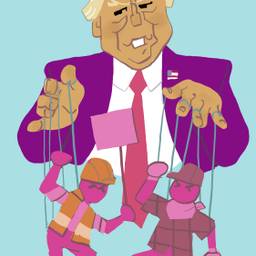
In late September 2025, two weeks after the assassination of Turning Point USA founder Charlie Kirk, the Trump administration released its National Security Presidential Memorandum-7 (NSPM-7). The memo singled out “anti-fascism” as the “organizing rallying cry” for a widespread and well-funded network set on overthrowing the United States, propagating “anti-Americanism, anti-capitalism, and anti-Christianity,” and promoting “extremism on migration, race, and gender.”
Earlier that same week, Trump issued a new executive order, “Designating Antifa as a Domestic Terrorist Organization.”
As legal experts pointed out, no U.S. law exists that “provides for [the] designation of a domestic terrorism organization.” But the label can still serve to turn political opponents into pariahs. As Thomas E. Brzozowski, who formerly worked on the issue of domestic terrorism at the Department of Justice, observed, even if the Trump administration’s efforts to designate “antifa” as a terrorist organization can’t withstand legal review, “it can still do the work of law in the streets, on bank compliance desks, and across social media platforms,” pressuring individuals and institutions into anticipatory compliance.
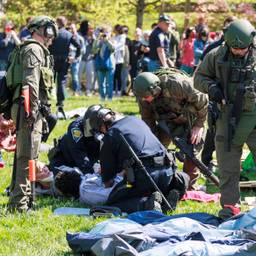
The administration, which is particularly keen to publicize supposed connections between antifa and progressive nonprofits, is certainly trying to claim legal authority. The NSPM-7 memo, which suggests the attorney general’s office has the authority to designate domestic terrorist organizations, also directs federal investigators to prioritize certain charges, such as “providing material support to terrorists.” And in October and November 2025, DOJ prosecutors appear to have followed these directives closely in the federal indictments of nine individuals allegedly responsible for the July 4 armed attack on federal and local officers during a protest against Trump’s immigration policies at the Prairieland Detention Center in Alvarado, Texas.
The indictment refers to what it calls the “North Texas Antifa Cell” (in terms that replicate those used in Trump’s executive order) as “a militant enterprise made up of networks of individuals and small groups primarily ascribing to a revolutionary anarchist or autonomous Marxist ideology.” Similar to how anti-racketeering laws were used in 2023 to ensnare nonviolent Cop City protesters and their supporters, the Prairieland indictment includes people who were not even present during the Alvarado protest when the attack took place. Among them is Daniel Sanchez Estrada, whose supposed crime is “transporting a box containing numerous Antifa materials” — namely, anarchist zines.
A recently leaked DOJ memo from Bondi sets out how to implement NSPM-7 in even broader and vaguer terms, directing the department to compile a list of “domestic terrorist” groups based on their opposition to Trump’s agenda, as well as soliciting public tips on Left activism, in what journalist Ken Klippenstein calls “a bounty system for anti-Trump thought.”
But for all its intimidatory force, the domestic terrorist designation is still too legally questionable to fulfill the administration’s repressive ambitions, which — as detailed by Trump’s deputy chief of staff, Stephen Miller, on a late September 2025 podcast—include using all of the federal government’s investigative and punitive tools to “identify, disrupt, dismantle and destroy” the radical Left networks that Miller blamed for Kirk’s murder, to “make America safe again for the American people.”
Three weeks later, on October 8, the White House convened a “roundtable on Antifa.” A bevy of far-right activists, including PizzaGate conspiracy theorist Jack Posobiec and right-wing social media influencer Andy Ngo, spoke alongside government officials, including Trump, Miller, Attorney General Pam Bondi and DHS Secretary Kristi Noem. Posobiec tellingly claimed that antifa “has been around in various iterations for almost a hundred years…going back to the Weimar Republic in Germany” — which is to say, when the Left and the workers’ movement organized against rising Nazism — and Ngo suggested antifa’s “international arm” be designated a foreign terrorist organization. Asked during the meeting whether he would push for such a designation, Trump responded affirmatively, directing Secretary of State Marco Rubio, “Let’s get it done, Marco.”

Rubio followed through in November, announcing the United States had declared four European “antifa” groups, from Germany, Italy and Greece, to be “Specially Designated Global Terrorists” to be added to the government’s list of Foreign Terrorist Organizations.
The four groups (only one of which describes itself as antifascist) have participated in actions that could fall under some legal definitions of terrorism: Germany’s “Antifa Ost” allegedly attacked a 2023 Hungarian neo-Nazi rally; the other three anarchist formations have carried out violent actions against various political targets over the past decade, including a nuclear engineering CEO and Greek riot police. But they are also small, marginal entities that pose no threat to U.S. national security — let alone are “conspiring to undermine the foundations of Western Civilization through their brutal attacks,” as Rubio’s announcement put it.
Behind the hyperbole lies a more concrete agenda: the administration’s efforts to define antifa as an international conspiracy, so that American antifascist groups and activists can be declared part of a “foreign terrorist organization.” While Trump’s threats to name protesters as domestic terrorists are legally dubious, the FTO designation carries enormous discretionary powers, especially when it comes to allegations of material and financial support — as demonstrated by the federal terrorism prosecution of five Muslim Americans raising donations for Palestine in the early 2000s case of the Holy Land Five.
Taking the next step to designate such antifascist organizing as foreign terrorism could unleash a limitless repressive arsenal, especially since the antifa label does not refer to a formal organization but the loosest of networks and identities, and the U.S. government is happy to apply the label to the most diverse targets — from Greek anarchists to Americans blowing whistles at immigration raids.
As Brzozowski notes, such a designation could be used to justify everything from denaturalizing naturalized citizens who participate in protests or donate to activist groups, to private litigation against antifascist activists, to invasive surveillance under the Foreign Intelligence Surveillance Act, to silencing academic speech and research that could be associated with antifascism.
The chilling effect on political organizing is already becoming apparent: In October 2025, the International Anti-Fascist Defence Fund, which raises money for antifascists facing government repression, shut down its U.S. fundraising infrastructure in response to Trump’s orders.
Trump opponents who think this wave of repression will not touch them might want to think again. The ultimate targets of this grotesque Red Scare revival — in which antifa is implausibly cast as a terror network rivaling ISIS in menace and sophistication — are not the peripheral groups allegedly involved in acts of violence in Budapest or Alvarado. It’s the mass antifascist movement that has emerged in response to the occupation of U.S. cities by federal agents, the disappearance of immigrants (or those who look like them) and anyone who comes to their aid.
In Chicago, and other cities now learning from Chicago, this everyday antifascism includes various grassroots practices, from rapid response networks and community patrols to whistle and car-horn alerts, school escorts and buyouts that help food vendors remain out of harm’s way. But these popular protests have also found an echo in city government, with Mayor Brandon Johnson urging the crowd at an October “No Kings” rally, “Are you ready to fight fascism? Are you prepared to destroy authoritarianism once and for all?”
The defense of migrants against a violent and racist deportation machine shows how genuine antifascism is built out of practices of solidarity; it need not label itself antifa nor name fascism as its target. Much the same could be said of the encampment movement against Israel’s genocide in Gaza, which reinvented for our dark moment the internationalism that has always been a defining feature of antifascism.
But a popular antifascism that is actually capable of countering Trump’s repressive onslaught, with all its conspiracy theories and legal threats, will also need to tap further into the material, economic bases of the struggle against authoritarianism. As demonstrated by federal anti-immigrant worksite raids, the Trump administration’s efforts to roll out a kind of border police state manifest as an assault on the multiracial (and especially Latinx) working class.
Putting antifascist solidarity at the core of opposition to Trump and his cronies can make explicit how the fight against the politics of fear, hierarchy, privilege and domination is always grounded in an alternative vision and practice of collective life — one in which our security and well-being is not based on the insecurity and deprivation of others.

Get 10 print issues of our award-winning, worker-first journalism here!
ALBERTO TOSCANO is the author of Late Fascism: Race, Capitalism and the Politics of Crisis (Verso) and Terms of Disorder: Keywords for an Interregnum (Seagull). He lives in Vancouver.


