Kingston’s Quiet Rent Revolution
Landlords have spent years ignoring a historic rent reduction. Now, tenants are organizing to get their money back.
Thomas Birmingham


KINGSTON, N.Y. — On September 1, John and Gail Bechtold tore open their monthly rent statement, hoping their landlord had finally given in and fixed it. But those same four numbers stared back at them: $1,700.
It was the 39th month in a row that Opus Management Group overcharged the Bechtolds by $221.74 for their apartment in the Dutch Village (or, as Gail calls it, Dump Village) complex in Kingston. According to a state housing agency ruling, Opus owes the Bechtolds, both retirees in their 80s, well over $10,000.
Whether they can get that money back, however, is a question whose answer will likely reverberate throughout the tenant movement.
“They’re not going to pay back,” Gail told In These Times, laughing. “I don’t trust these people for anything.”
The Bechtolds represent one of over 1,000 rent-stabilized units in Kingston, a small city 90 miles north of Manhattan. Nearly all of the tenants in these units have likely faced similar overcharges, stemming from a widely ignored 2022 decision from the Kingston Rent Guidelines Board (KRGB) to reduce rents in all rent-stabilized units by 15% in response to skyrocketing housing costs during the Covid-19 pandemic.
It remains the only city in U.S. history to attempt such a measure. By and large, Kingston tenants still have yet to see the benefits, thanks to a yearslong campaign spearheaded by landlords like Opus — a large corporate owner with hundreds of units across the East Coast, including roughly one in five rent-stabilized units in Kingston — to challenge the reduction in court and dare the state to enforce its laws. Opus did not respond to multiple attempts to request comment.
Earlier this summer, the Bechtolds also became members of the newly formed Hudson Valley Tenants Union (HVTU). Spearheaded by longtime organizer June Nemon, the coalition of renters is dedicated to defending rent stabilization and building tenant power. At its first general assembly on June 13, the union also unanimously passed a resolution to help Kingston tenants file paperwork to prove they have been overcharged.
In doing so, Nemon said the union hopes to serve as a grassroots collective that can ensure the rights tenants have already won will actually be enforced.
“The systems that we have are not really built for tenants,” Nemon said. “They’re built fundamentally to protect property rights. But winning this fight would lead to a significant transfer of wealth from landlords back to the tenants they’ve exploited.”
“The precedent that sets would hopefully open a lot of new opportunities for working people.”
Over the three years prior to the 2022 reduction, Opus increased the Bechtolds’ rent by $200 while their pensions from IBM remained fixed. This reflected a citywide trend: Kingston’s median rent has nearly doubled over the past decade as wage growth lags far behind, in a city where nearly a fifth of the population lives in poverty.
In 2022, this crisis prompted Kingston to become the first municipality in upstate New York to adopt the Emergency Tenant Protection Act (ETPA), which allows cities to opt into rent stabilization. Just a few months later, the newly established KRGB enacted the 15% reduction — and landlords, including Opus, immediately sued to block it, denying its legality ever since.
When the Bechtolds next renewed their lease in July 2023, per the reduction, their rent should have decreased from $1,700 to $1,478. But the lawsuit ensured any enforcement efforts would have little teeth until the courts issued a final decision. So, Opus simply kept their bills the same.
Later in 2023, Opus increased the Bechtolds’ bill by introducing a mandatory $70 monthly fee for internet throughout Dutch Village, a practice seen by tenant advocates as a flagrant attempt to skirt rent stabilization. One year after the reduction, the Bechtolds’ monthly housing costs were now higher than ever, and they subsequently spent years paying nearly $300 in excess housing costs per month.
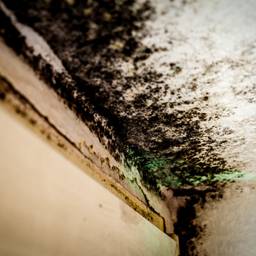
The hikes and overcharges also occurred as the Bechtolds penned regular letters to Opus’ corporate headquarters in New Jersey to demand repairs for the numerous hazardous conditions. Plumbing issues have repeatedly caused water leaks and buildup of “garbage” in the bathroom sink, and persistent mold has sent the highly allergic Gail in and out of the hospital. Such issues have been widespread at Dutch Village; when dozens of units saw severe water leaks during storms this winter, Opus neglected necessary repairs for months.
Taken all together, it’s a tough pill to swallow.
“I find it’s a very cruel world,” Gail said. “I get shots in my eyes that cost us a fortune. Right now, with the gas and everything, the economy is killing us.”

According to Ben Surface, an attorney with the Hudson Valley Justice Center who is providing legal aid to HVTU, Kingston landlords like Opus made a risky bet after the 2022 reduction. Because the KRGB voted to keep the regulated rent frozen in 2023, 2024 and 2025, the rents in stabilized apartments in Kingston today should legally not be a cent higher than the reduced 2022 rents. But many landlords have continued charging tenants as though that reduction never happened.
In New York, though, tenants who can prove their landlords willfully overcharged them are entitled to “treble” damages — three times the raw sum. For the Bechtolds, that would mean more than $660 back from Opus for every single month of overcharge.
HVTU has formed to help ensure landlords like Opus lose their bet and tenants like the Bechtolds get paid.
“What the tenants union is able to do is get neighbors talking to each other, so everybody is making decisions with full understanding of their rights,” Surface said. “Now [landlords] can’t just take advantage of people who don’t know what their rights are.”
At the union’s general assembly in June, HVTU demonstrated this theory being put into practice. On top of the resolution committing the group to coordinated overcharge paperwork assistance, they staged a presentation from Marcie Kobak, director of litigation at Legal Services of the Hudson Valley, who with help from the union has taken on nearly 100 Kingston tenants fighting to recoup their overcharges as clients.
Gail and John were part of the first wave to begin this process, filing overcharge paperwork, with Kobak’s help, in November 2024. By then, the landlords’ lawsuit had reached the state Court of Appeals. But New York’s Division of Homes and Community Renewal (DHCR) was holding off on cases like the Bechtolds’ until it was decided.
Eight months later, in June 2025, landlords definitively lost their bet, with the Court of Appeals ruling that KRGB was exercising its legal authority in issuing the much-needed relief to Kingston tenants. A month later, the Bechtolds were tearing open some new mail — an order from DHCR.
“The Rent Administrator finds that subsequent to August 1, 2022, a rent overcharge occurred. … The owner is responsible for: Treble Damages on the overcharge,” it read.
Opus, naturally, has appealed the order, which remains undecided. The appeal denies Opus’ “purported failure to comply with an unprecedented and unlawfully promulgated rent reduction,” describing the order as “a profound failure of administrative due process.”
Despite this bravado, Opus’ current relationship with the Bechtolds reveals at least a tacit acknowledgment that their ignorance of the reduction has no legal standing. After they received their DHCR order, the Bechtolds began paying Opus the corrected, lower monthly rent and placing the extra $221 into a savings account. Though Opus categorizes this as an overdue balance — even tacking on a $50 late fee every month — it has yet to evict the couple despite a full year of supposed rent delinquency.


Nemon said roughly a dozen Opus tenants in similar standoffs.
In addition, Kobak is representing 36 tenants across Dutch Village and Opus’ other large Kingston property, the 59-unit Chestnut Mansion, in collective, building-based lawsuits seeking to win tenants’ money back without DHCR. On average, the lawsuits allege Opus overcharged these tenants by over $7,000 between August 2022 and October 2025. Were treble damages to apply in these cases, Opus would owe them $791,000 collectively, or nearly $22,000 per tenant. This sum is based on just 36 of Opus’ more than 200 rent-stabilized units.
At least 33 more tenants at 11 non-Opus, rent-stabilized buildings in Kingston have also, through Kobak, filed group overcharge lawsuits. All told, Kobak’s lawsuits, representing approximately 5% of regulated units in the city, allege her clients are owed nearly $1.5 million.
Since the Bechtolds’ overcharges began, three years have come and gone, as has a year since the state decided Opus owed the Bechtolds that money back. John said there’s still no clear answer on when, or how, anyone will make that happen.
With Opus continuing to put an illegal, overdue balance — now over $2,000 — on their monthly bills, Gail said she feels trapped, fearing that if they ever moved, Opus would attempt to collect the contrived sum.
“What [Opus] is doing to us as people that worked our whole lives, making it so unaffordable and not keeping the place clean, it’s just a shame,” Gail said. “They’re heartless people.”
“I think, my God, they should be paying us for staying here.”
The Bechtolds’ DHCR letter gave two options if Opus refuses to pay: stop paying 20% of their monthly rent until the refund is completed, or “file and enforce this order as a judgment” — in other words, sue Opus for damages. Because Opus is still billing them $1,700, the first risks angering Opus and triggering an attempted eviction; the second could drag out indefinitely. Both options put the burden of enforcement primarily on the tenant.
According to Kingston’s state assemblymember Sarahana Shrestha, situations like the Bechtolds should raise alarm about the state’s underfunding of its enforcement agencies. Though there are reportedly plans to open an office in Kingston, Upstate tenants don’t yet have a dedicated DHCR office they can call (New York City tenants, meanwhile, have five). And Nemon says the website where tenants file paperwork is often down or faulty. “The enforcement of our housing policies are really suffering,” Shrestha told In These Times.
When asked what systems are currently in place to ensure landlords will pay any overcharges they owe, a DHCR spokesperson responded to In These Times saying, “[D]HCR cannot comment due to pending litigation” while noting that the state “continues to ensure the laws governing rent regulation are properly enforced; that includes proactive audits, investigations and other enforcement activities to protect millions of tenants and New York’s rent regulated housing stock.” The spokesperson did not specify what steps will be taken if a landlord refuses to pay.
As the pressure builds, each party’s behavior — the landlords’ aggressiveness, the tenants’ coordination and the state’s timidity — communicates a belief that the outcome of this fight matters beyond Kingston. If landlords en masse can be forced to pay back millions in excess rent, it would signal a major shift in what tenant organizing in the United States can achieve.
According to Sumathy Kumar, executive director of NYS Tenant Bloc, a statewide coalition of tenant organizations, Kingston is the “tip of the spear.”
“[Kingston] is part of a battle that New York City tenants feel connected to,” Kumar said. At hearings prior to the vote to freeze rents in NYC this June, there were a chorus of renters demanding not just a freeze, but a reduction. “We have to take this battle seriously because localities across the state are looking to Kingston to see what happens.”
Plus, a 2025 Times Union investigation found the NYC real estate lobby contributed up to $100,000 in legal fees to Opus and other Kingston landlords’ original challenge to the reduction. “It begs the question of why they’re spending resources on these legal battles instead of on our homes,” Kumar said.
In the meantime, Nemon has a union to build. The years of unjust overcharges are calcifying a base of activated, rent-stabilized tenants who increasingly see themselves as part of a shared class that can organize to bring landlords to the bargaining table and get horrific conditions fixed.
But with, according to Nemon, around 200 units now in the process of claiming their rent refund, priority one remains: Pay us back.
“[Organized tenants in Kingston] were certainly trying to push the envelope by doing a reduction,” Nemon said. “Now, the thing that we are constantly contesting is the feeling of hopelessness [because] this is taking so long.”
“But we have power, and we will use it.”

Thank you for reading this story. At a time when corporate media is dominating the web and our airwaves, independent journalism is more important than ever, and that’s what we provide at In These Times. We offer some of the best reporting, investigations and analysis on the growing movements for justice in the U.S.—and our work is firmly pro-labor and anti-fascist. To continue producing it, we need your support.
If you believe in the power of an independent press, please make a donation to In These Times today. By becoming a sustaining member, you can ensure that our work reaches even more readers.
And if you become a sustainer right now, you'll get a free year-long print subscription and a special subscribers-only print from artist Molly Crabapple.
Thank you.

Get 10 print issues of our award-winning, worker-first journalism here!

Thomas Birmingham is the Research Fellow at In These Times and an investigative reporter in New Haven, Connecticut. He has previously covered housing, tenant movements, and criminal justice for The Nation, The Appeal and the Louisville Courier-Journal.