The Explosive Growth of Prediction Markets Is a Symptom of a Deeply Sick Economy
Silicon Valley fuels them. Wall Street loves them. Prediction markets are everywhere, and ordinary people will pay the price.
Hadas Thier
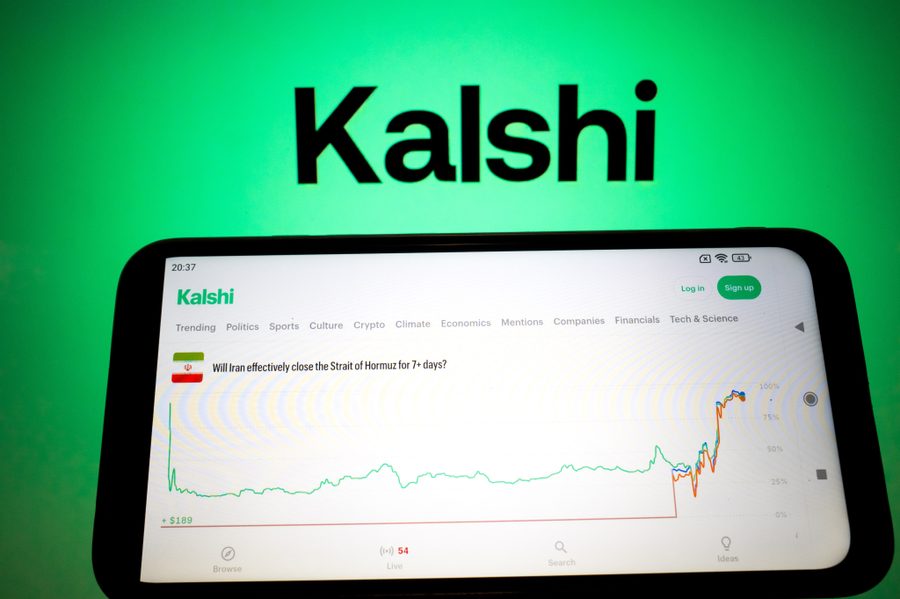

Prediction markets are booming, and the mainstream media has been aflutter with breathless hype and valuations, boosting “one of the fastest growing [markets] in finance,” according to Fortune. “We’re at the beginning of a prediction markets supercycle that could drive trillions in annual volume over time,” Vlad Tenev, CEO of Robinhood, announced during the company’s quarterly earnings call in February, according to Forbes. Robinhood, an electronic trading platform catered to everyday users, got in on the prediction markets game in 2024.
And late last year, Forbes ran a heavily promoted story titled “The Prince of Prediction,” profiling Shayne Coplan, CEO of Polymarket and one of the world’s youngest billionaires. The business outlet’s bemused description of the “boyish, eccentric entrepreneur” rang eerily similar to 2021-style media fawnings over once crypto wunderkind (and now imprisoned fraudster) Sam Bankman-Fried, ex-CEO of FTX, a bankrupt crypto exchange.
But the explosive rise of platforms like Kalshi and Polymarket is a symptom of a degenerative sickness of our economy — unrelenting inequality and desperation, and a growing financial nihilism, particularly among younger people in the United States.
Young adults already facing a bleak economic horizon have become increasingly vulnerable to the allure of high-risk, speculative activity: from day trading on Robinhood, to investing in cryptocurrencies, and now to placing wagers on prediction markets. Financial stability, to the extent that it ever existed, has largely been replaced by a gambling economy. And that’s music to the ears of the investors and companies profiting off of desperation.
Indeed, according to an April analysis by Bloomberg of every Polymarket account active since the beginning of 2025, “the majority of profits have been raked in by a tiny slice of what look to be automated bots” — the mark of institutional traders. Everyone else, the analysis confirmed, lost $131 million in aggregate.
Kalshi, Polymarket, and several other smaller and emerging platforms define themselves as “futures markets” that enable users to “trade contracts” — i.e. speculate and hedge risk — on the outcomes of sports games, news, and other events. The “contracts” framework allows prediction markets to skirt around the regulations and taxes typically associated with gambling companies, instead posing their activity as cutting edge financial assets. But with a few subtle differences, they add up to the same dynamic gamblers seek at a casino: you stake money on a wager, with the chance of losing it or winning more.
Last year, prediction markets generated almost $64 billion in trading volume, four times that of 2024. Monthly trading volume reached a record $18.6 billion in February, compared to less than $100 million a month in early 2024. The industry has exploded, not coincidentally, since President Donald Trump returned to the White House — and with him the rush to deregulate everything. Trump officials have offered strenuous support to the industry, going so far as to file lawsuits against states that attempt to curtail the activities of prediction markets within their borders.
Operating under the guise of financial markets, regulation of the prediction market industry has contentiously fallen to the Commodity Futures Trading Commission (CFTC) rather than state-level gambling commissions. And that federal commission is today in the hands of Trump appointee Michael Selig who leads the agency, largely because of his pro-crypto experience and industry ties. Selig had vowed, in a post on X to “help the President make the United States the Crypto Capital of the World,” and crypto industry leaders and trade groups vocally supported his nomination. Under Selig, the commission has made an about face from its days during the Biden administration, when it had attempted to regulate crypto while banning Polymarket and battling the legal jurisdiction of Kalshi.
Now, the CFTC is among the industry’s biggest champions. Selig (who today is the only commissioner of what is meant to be a five-person bipartisan commission), filed a friend-of-the-court brief on behalf of crypto.com’s prediction market and declared on X: “To those who seek to challenge our authority in this space, let me be clear: We will see you in court.” The Department of Justice, too, which had previously opened a criminal investigation against Polymarket (even raiding the apartment of founder Shayne Coplan) has since dropped its investigation. The White House instead invited Coplan to sit alongside “high IQ individuals” at the White House crypto summit last March.
Predictably, the Trump family is itself enmeshed in prediction markets. Donald Trump Jr. is a paid advisor for Kalshi, sits on Polymarket’s advisory board and has invested tens of millions of dollars in Polymarket through the venture capital firm 1789 Capital, where Trump Jr. is a partner.
Political and financial nihilism
Prediction markets go one better than sports gambling because they widen the online casino’s tent to encompass any possible topic you could think of — from the mundane to the grotesque. As Kalshi cofounder Tarek Mansour put it: “The long-term vision is to financialize everything and create a tradable asset out of any difference in opinion.” Users have entered into contracts on everything from the number of times Elon Musk will tweet in a given week, to the year that Jesus Christ will return, to how many acres would burn in last year’s Palisades wildfire. In early March, days after the Trump administration and Israel launched their joint bombing campaign on Iran, Polymarket posted to X advertising a bet on the chance of nuclear detonation.
If turning misery and annihilation into a money-making sport seems like a corrosively dystopian development, fear not. Polymarket added this helpful reminder while raking in transaction fees on bets around the war on Iran:
“Note on Middle East Markets: The promise of prediction markets is to harness the wisdom of the crowd to create accurate, unbiased forecasts for the most important events to society. That ability is particularly invaluable in gut-wrenching times like today. After discussing with those directly affected by the attacks, who had dozens of questions, we realized that prediction markets could give them the answers they needed in ways TV news and 𝕏 could not.”
Over half a billion dollars was traded in wagers on the assault between December 22 and February 28 when the strikes on Iran began. Along with these wagers, too, come dubious conflicts of interest, insider trading, and even the incentivization of violent acts. Democracy Now! reported that one user, calling himself Magamyman, made more than $500,000 betting on the timing of the initial U.S. strikes on Iran, with his first trade placed about an hour before news of the assault broke, leading to questions about whether advance knowledge was involved. Meanwhile, the fact that users stood to cash in on bets like “Will Palisades wildfire spread to Santa Monica by Sunday?” could not-so-subtly encourage arson.
A world where ordinary people engage in gamified speculation on potential measles outbreaks, war, and the second coming is a grim one. But its arrival is a logical — if dystopian — development, given the growing economic desperation and political alienation that characterizes our current era. In a Wall Street Journal-NORC poll conducted in 2025, nearly 70% of those surveyed said the American dream, which promises success to those who work hard, is no longer a reality or never was. Last year saw the weakest job growth since the pandemic, with the fewest jobs created outside of a recession since 1992, and consumer delinquency rates on loans are at their highest level since 2017.
Neither major political party’s leadership seems to be doing much of anything to help lessen this economic despair, and elections are corrupted with the influence of corporate money and powerful super PACs, including from the crypto and prediction market industries. All the while, an increasingly authoritarian Trump regime is running roughshod over our political system, facing little resistance from the Democratic Party.
Enter fun money, which promises to provide a shortcut out of the malaise: whether in the form of prediction contracts on wars and disasters, or in the form of thousands of tradable cryptocurrencies from the best-known Bitcoin to lesser-known, but still multi-million dollar ventures like Fartcoin (whose transactions produce a digital fart sound), or in myriad forms of Wall Street type concoctions like options and exchange-traded funds (ETFs), which are evermore available to the ordinary “retail investor” via addictive apps on your phone.
A survey released in March by Northwestern Mutual affirmed that many young adults are investing in high-risk, speculative assets like crypto, sports betting, and prediction markets, and that they are doing so because they have fallen behind financially. According to the report, younger savers are looking for shortcuts to wealth as they are confronted with limited job opportunities, expensive housing costs and often, student loan debt to pay off.
A third of Gen Z survey respondents said they either already invest in or are interested in investing in prediction markets, sports betting, and crypto. Millennials fall into a similar range, with 24% and 35% investing or interested in investing in prediction markets and crypto, respectively. Among those invested in or considering investing in these financial instruments, the percentage of those who feel financially behind and believe that high-risk, speculative investments are more effective than traditional methods to reach economic stability stands at 73%.



Journalist Ainsley Harris’s description of the rise of the cryptocurrency bubble in 2021 applies as clearly to today’s prediction market boom: “[M]illennials and subsequent generations,” she wrote in Fast Company, “have no memory of good times. Warned that they will get wiped out, younger crypto investors respond with a shrug. There’s nothing to lose and everything to gain.” When it comes to crypto, the wild booms and busts of its markets made a few, highly publicized fortunes for some, and broke the financial backs of many others.
A gambling economy
The problem with widening access to speculative trading and risky investments is that despite occasional (and widely hyped) success stories, ordinary people and vulnerable populations are only exposed to even greater financial fallouts. Whether riding the rollercoaster of crypto investments or placing bets on prediction markets, a gambling economy creates unhealthy and risky addictions in place of stable economic growth.
These risk-filled gambits are opportunistically posed as a means of accumulating wealth, disrupting traditional stock investing and empowering ordinary people. And the vanguard of this so-called democratization hail from dubious sources, like Donald Trump Jr. lecturing that banking is a Ponzi scheme but crypto democratizes finance, or rich Stanford kids posing as modern day Robin Hoods, or Kalshi’s website claiming that the company offers a “fair, open marketplace” rather than “casino monopolies…[that] want you to lose.”
But instead of empowering those who lack financial resources, the gambling economy creates a wider base of petty investors, whose investments bring in more cash for sophisticated investors to profit off of. Unsurprisingly, it’s the wealthier and institutional investors who have benefited, and the financially vulnerable that have risked and lost the most.
In the case of cryptocurrency markets, large crypto and financial firms regularly create massive price fluctuations any time they buy and sell large holdings. These firms often cash out of their crypto at the expense of smaller investors, as ordinary people with less funds and less information tend to follow rather than lead the trends. The pot grows as more people pile in. But professional investors know when to pull their money out, and ordinary people are typically left holding the bag of assets that have rapidly lost their value. In the process, they lose their investments, their homes, or worse.
The growing field of prediction markets is primed to follow the same script. According to WIRED, Kalshi is “already seeing billions of dollars in trading volume generated by institutional investors” on its platform. Meanwhile, Jump Trading, a high-frequency trading firm, has taken an equity stake in both Kalshi and Polymarket, and Susquehanna International Group is currently Kalshi’s lead market-maker (meaning it provides liquidity by continuously buying and selling Kalshi contracts). Prominent brokerages are planning to provide clients exposure to prediction markets, and countless venture capital firms are committing billions of dollars into funding the platforms. “Trading firms and crypto funds that have gotten into prediction markets are making the majority of the profits,” Cory Klippsten, CEO of Swan Bitcoin, told WIRED. “Retail is really just getting their face ripped off every day.”
While discussing the merits of “big money” getting a piece of the field in a February story, Business Insider writer Emily Stewart was blunt about the aims:
A market isn’t very valuable if it’s a tiny group of randos guessing what the temperature in New York City will be based on their iPhone apps. What you need first is a lot of randos betting on the weather, so that the payouts are substantial enough to make the bets worthwhile. Then you need at least some people who really understand the weather to get involved, which they’ll be incentivized to do because of the randos… If you calibrate the right mix of ‘smart’ money and ‘dumb’ money so that the market is both liquid and relatively well-informed, then you can get the ‘big’ money from institutions.
Dartmouth College Economics professor Eric Zitzewitz explained to Stewart: “Those other people are going to, on average, make losses if they know less about the subject matter than the experts. So you need them to be willing to trade despite that. You need them to be overconfident about how much they know.”
Maybe all this works out, Stewart floated: “The institutions get in, markets get to keep their desired regulatory blessing, the dumb money draws in the smart money and doesn’t figure out it’s dumb, and they become mass-market products.”
Industry leaders of prediction markets have argued that what makes them different from traditional sports betting is that they do not serve as “the house.” Bettors instead wager their predictions against each other, and the platforms reap their profits via transaction fees, rather than the losses of their gambling customers. But regardless of whether “the house” is made up of a casino owner, or it is shared out between platform CEOs and institutional investors operating within it, the truism of the gambling economy persists: The house always wins.

Get 10 print issues of our award-winning, worker-first journalism here!
Hadas Thier is an activist and socialist in New York, the author of A People’s Guide to Capitalism: An Introduction to Marxist Economics, and a regular contributor to Jacobin Magazine. She tweets at @HadasThier.