How The War on Terror Continues To Terrorize Communities 25 Years Later
Twenty five years after the 9/11 attacks and the launch of the Global War on Terror, the U.S government continues to expand its tools of repression to further crush dissent.
Tina Al-khersan and Azadeh Shahshahani

In early 2025, the world watched as masked federal agents abducted Pro-Palestinian activists across the country based on the premise that they were promoting or supporting terrorism. Having tested various legal boundaries through these cases, the Trump administration became further emboldened later that year, issuing the National Security Presidential Memorandum (NSPM-7) in September 2025. The memorandum effectively equated certain political and ideological beliefs with terrorism, and a slew of politically motivated attacks quickly followed.
In June 2026, the Justice Department indicted two Cop City activists in Georgia on arson charges. Within the same week, charges were brought against eight pro-Palestine activists in Michigan and 15 anti-Immigration and Customs Enforcement (ICE) activists in Minnesota. Although these attacks have in many ways felt unprecedented, they must be seen as a continuation of the War on Terror, in which the security apparatus constructed over the last 25 years is now being used to aggressively target political dissent within the United States.
Issued less than a year into President Trump’s term, NSPM-7 broadens an already elusive definition of terrorism, declaring differing ideological beliefs as indicators of violence. Specifically, the memorandum links “anti-Americanism, anti-capitalism, anti-Christianity, support for the overthrow of the United States government; extremism on migration, race, and gender; and hostility towards those who hold traditional American views on family, religion, and morality” with a propensity for violent conduct. Based on this purported likelihood of committing domestic terrorist acts, the memorandum authorizes law enforcement to preemptively target individuals before and after “violent” political acts occur.
Since the issuance of NSPM-7, activists on the political Left have been routinely targeted, from the Prairieland defendants who have received a combined sentence of over 556 years in prison for an anti-ICE demonstration the administration labeled a “terrorist attack,” to the range of Cuba solidarity activists whom the U.S. State Department has labeled as “terrorists” to justify further attacks.
The issuance of NSPM-7 and the accompanying attacks have only been made possible because of the legal frameworks and erosion of legal safeguards that have accompanied 25 years of the so-called War on Terror. For example, the NSPM-7 relies on the concept of preventative policing, which was popularized in the aftermath of the September 11, 2001 attacks. Government programs like the National Security Entry-Exit Registration System (NSEERS) and Countering Violent Extremism were premised on this very idea, where religious and national identity served as a supposed precursor to “terrorist activity.” These programs expanded state power while routinely curtailing individuals’ fundamental rights through mass surveillance of communities, the expansion of material support of terrorism laws, and the detention and torture of countless individuals.
Despite the documented, widespread human rights abuses such government programs resulted in, the lack of domestic and global accountability have allowed the preventative policing model to resurface through NSPM-7, this time with a focus on left-leaning groups. The administration’s recent efforts to silence dissent in Minnesota as part of its campaign to target “domestic terrorism” serve as one recent example. There, undercover federal agents launched surveillance programs to infiltrate and monitor left-leaning groups, including labor unions, political organizations, and activists, among others.
While Operation Puppet Master authorized spying on community members, Project Whipple Shield aimed to identify organizing efforts that disrupted federal activities. Both investigations authorized mass surveillance of certain left-leaning groups based on the premise that activists were aiding “violent opportunists and agitators,” similar to the logic adopted by the preventative policing model.
The legal framework of the “War on Terror” has influenced NSPM-7 in many other ways as well. The USA Patriot Act, also passed after September 11, 2001, included a definition of “domestic terrorism” that human rights groups warned could subject political organizations to surveillance and criminal charges. As these groups predicted, NSPM-7 relies on the already elusive definition in the Patriot Act to categorize dissent as “terrorist activity.”
NSPM-7 simultaneously builds on the Patriot Act’s expansion of “material support to terrorism” laws outlined in two U.S. statutes, 18 U.S.C. § 2339A and § 2339B. While Section 2339A targets those who provide material support or resources for any offense identified as a federal crime of terrorism, Section 2339B applies to those who provide material support or resources to a “foreign terrorist organization,” as designated by the U.S. State Department. From reliance on preventative policing to inclusion of provisions of the USA Patriot Act, NSPM-7 cannot be separated from the War on Terror that has plagued our communities for over two decades.
Alarmingly, the impacts of the War on Terror on the current crackdown on dissent are felt not only at the federal level but also at the state level as well, where the administration and its allies are building legal infrastructure to expand their attacks on dissent. In addition to NSPM-7, states like Florida have passed legislation that leverages the power of the state to instill fear and crush political dissent in movement and organizing groups. Specifically, House Bill 1471 in Florida, which came into effect in July 2026, gives state officials the power to designate organizations as “domestic terrorists.” House Bill 1473 then prohibits organizations from accessing records related to that designation, limiting the ability for impacted organizations to challenge such designations. States like Georgia have already followed suit and attempted to pass similar legislation.
As the United States continues to expand on the “terrorism” framework and wage a so-called “War on Terror,” the country’s approach to terrorism is being exported globally. With facism on the rise in various countries, authoritarian leaders continue to look for ways to silence political ideologies that threaten the status quo.
Following President Trump’s attacks on pro-Palestinian solidarity activists, the United Kingdom voted to ban Palestine Action under the country’s terrorism laws, an organization that seeks to take direct action to end “global complicity with Israel’s genocidal apartheid regime.” As a result, four activists were sentenced with terrorism enhancements for their involvement in a protest and raid at an arms manufacturer for Israel, despite the fact that they themselves were not convicted of terrorism. The UK joins a growing list of countries like India, which have long abused counterterrorism measures to silence dissent.
The United States itself is also making strides to ensure that its policies are adopted elsewhere, recently hosting a conference for over 65 countries to discuss the “Resurgence of Political Terrorism.” The conference discussed three kinds of threats, including “violent left-wing extremists,” with the hopes of expanding coordination and information sharing between countries. Given the United States’ increased McCarthyite targeting of political dissenters, including individuals and organizations who have spoken out about the inhumane U.S. blockade on Cuba, serious concerns remain regarding what oppressive frameworks other countries will adopt to silence political dissent as the United States continues to test legal limits.
While the latest actions of the Trump administration feel unprecedented, the War on Terror is anything but new for the communities who have faced its devastating impacts. For the last 25 years, activists and community members alike have raised alarms, arguing that the systems expanding the national security apparatus to target “terrorism” were not only resulting in present harm but held future terrifying ramifications — much like the ones we are experiencing today.
It is well past time that we take heed of their warnings, deconstruct the “terrorism” apparatus, and put forward new frameworks that collectively protect our fundamental rights.
Thank you for reading this story. At a time when corporate media is dominating the web and our airwaves, independent journalism is more important than ever, and that’s what we provide at In These Times. We offer some of the best reporting, investigations and analysis on the growing movements for justice in the U.S.—and our work is firmly pro-labor and anti-fascist. To continue producing it, we need your support.
If you believe in the power of an independent press, please make a donation to In These Times today. By becoming a sustaining member, you can ensure that our work reaches even more readers.
And if you become a sustainer right now, you'll get a free year-long print subscription and a special subscribers-only print from artist Molly Crabapple.
Thank you.

Get 10 print issues of our award-winning, worker-first journalism here!
Tina Al-khersan is a Staff Attorney at Project South.
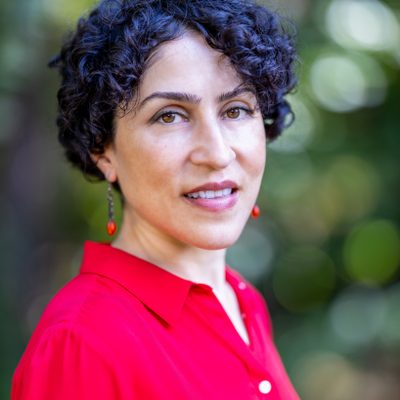
Azadeh Shahshahani is the Legal and Advocacy Director at Project South: Institute for the Elimination of Poverty and Genocide and a past president of the National Lawyers Guild.