Woke 1 Was Not “Crazy,” but Needed
When progressive politicians disavow the politics of 2020, they erase a legacy of Black political thought—and the policies it built that are quietly working today.
Calvin John Smiley


In August, New York Rep. Alexandria Ocasio-Cortez (D-N.Y.) stated, “Woke 1 was crazy,” on ABC’s “This Week” news show. She borrowed the phrase from her New York colleague City Councilman Chi Ossé, who had used it in a May post on X (formerly Twitter).
Soon after, New York City Mayor Zohran Mamdani said this about AOC’s statement: “What you believe can change, it can develop, it can grow. … I’ve made very clear that I do not believe in defunding the police, that I will not be defunding the police.”
Woke 1 — which, according to the Internets, refers to cultural and social activism in and around 2020 — was not “crazy.”
These statements by progressive elected officials sparked criticism. Some labeled AOC an opportunist. Others gave Mamdani a bit more grace, arguing he was being strategically cautious. (As the person who must now work directly with the NYPD, he could be hoping to avoid the antagonism that plagued former Mayor Bill de Blasio’s police reform efforts.)
Yet the exhausting part of this debate is the seemingly endless pattern of people running on progressive or radical ideas only to retreat to the center once elected. Woke 1 was not crazy. It was an important moment in a longer legacy of struggle. To claim it was just a clumsy blip is disingenuous at best and dangerous at worst.
Wokeness is not a new concept. It has origins dating back to both Garveyism in the early 20th century and more recently to Erykah Badu’s 2008 song “Master Teacher,” in which she repeats the phrase “stay woke.” But for many of the hip-hop generation, the term was inspired by Black movements such as the Nation of Gods and Earths, which uses the term “woke” to refer colloquially to knowledge of self. The idea of being woke was then popularized further by 1990s hip-hop groups such as Brand Nubian and Wu-Tang Clan. It became cemented in my mind by the Black Star song “K.O.S. (Determination),” in which Talib Kweli and Mos Def rap the chorus: “With that — what? (Knowledge of self.) Determination.”
It took another 25 years for white conservatives to learn the term and co-opt it into a watered-down social media buzzword.
Despite this, wokeness is part of Black history. Knowing one’s history — the people, collectives, organizations and movements that came before us — is what helps many Black people navigate and endure a world that subjugates us.
As a teenager in the 2000s, I was reminded by Black elders to “stay woke,” meaning not only to learn this history but to remember it and use it. To dismiss wokeness is to dismiss the importance of this kind of self-knowledge.
When Mamdani tweeted “#DefundTheNYPD” in 2020, he was responding to the murder of George Floyd by a Minneapolis police officer. People around the globe similarly responded to the ideas of #defundthepolice and what they meant. Some will counter that it was too vague a demand. However, as I write in my book Defund, mainstream Republicans and Democrats alike attempted to appropriate or dismiss the phrase, respectively.
Former Georgia representative and loyalist turned enemy of Donald Trump, Marjorie Taylor Greene, tweeted “DEFUND THE FBI” in the aftermath of Trump’s Florida home being raided in 2022. During his State of the Union speech that same year, President Joe Biden exclaimed, “We should all agree: The answer is not to defund the police. It’s to fund the police.” Both parties clearly understood the power of this phrase and feared its influence on an electorate saddled with bloated police budgets and inadequate social services that actually help keep people safe. As I write in Defund, this fear was justified: “Defund gives us a platform and pathway to reimagine a society with less police, more care and services that meet the needs of all.”
The irony is that tenets of defund continue to shape progressive policy today. The Mamdani campaign made an ambitious promise to create a $1.1 billion Department of Community Safety. While this has not come to full fruition, he did create the Mayor’s Office of Community Safety by executive order with a budget of $260 million. This office plans to offer non-police responses to mental health crises and become a blueprint to combat gun violence — a defund strategy. According to the research hub Interrupting Criminalization’s toolkit, “The Demand Is Still #DefundPolice,” over $840 million was reallocated from police department budgets to other community needs in the months after the nationwide Black Lives Matter protests.
Outside NYC, cities around the country have rethought approaches to public safety in the aftermath of Defund Summer 2020. For example, Albuquerque, N.M., has started a community safety department that dispatches social workers, counselors and other community members to nonviolent crises. In a December 2025 report, the Center for Policing Equity found that more than 100 other localities implemented their own non-police crisis response programs between 2020 and 2024 (including Denver, Austin, Texas, and Oakland, Calif.) — a direct reflection of social movements advocating for defund and Black Lives Matter.
Last year, Baltimore saw its lowest homicide rate in nearly 50 years. Researchers have attributed this to Mayor Brandon Scott’s continued millions-of-dollars investment in violence interrupters and other community outreach workers — specifically taking a public health approach to gun violence prevention rather than solely relying on police. These efforts also build on the success of Baltimore programs like Safe Streets, which was established in 2007 as an evidence-based strategy to reduce gun violence. The program asks outreach professionals to mediate conflict and use de-escalation methods. In New Jersey, the Newark Community Street Team has invested in evidence-based and trauma- informed approaches to violence, reducing overall crime by 19% in 2025.
And according to the Council on Criminal Justice’s 2025 year-end report, overall national violent crime has begun dropping significantly, including a 21% drop in homicides from 2024 to 2025 across 35 large American cities. While we cannot say definitively that the sole reason is alternative or innovative approaches to crime, we can infer that these approaches are, at the very least, contributing to these declines and that officials inspired by summer 2020 to look beyond “arresting our way out of crime” have played a pivotal role.
Is there room for reflexive critiques of movement strategies? Absolutely. But that is done within organizing collectives to sustain momentum — not publicly in counterproductive wholesale dismissals. If Woke 1 is a cultural war around language, taking a reactive position only supports and retains the status quo and fuels reactionaries. Revolutions are not born in comfort but rather by creating contentious positions that challenge current conditions and offer the possibility of change. Defund has and continues to inspire challenges to capitalism, and that cannot be erased.

Thank you for reading this story. At a time when corporate media is dominating the web and our airwaves, independent journalism is more important than ever, and that’s what we provide at In These Times. We offer some of the best reporting, investigations and analysis on the growing movements for justice in the U.S.—and our work is firmly pro-labor and anti-fascist. To continue producing it, we need your support.
If you believe in the power of an independent press, please make a donation to In These Times today. By becoming a sustaining member, you can ensure that our work reaches even more readers.
And if you become a sustainer right now, you'll get a free year-long print subscription and a special subscribers-only print from artist Molly Crabapple.
Thank you.
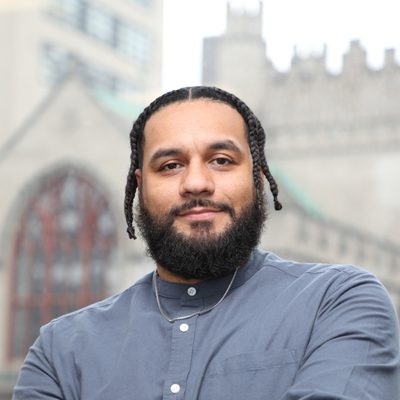
Calvin John Smiley is a professor of sociology at Hunter College and author of Purgatory Citizenship: Reentry, Race, & Abolition, Defund: Conversations Towards Abolition and the new book Prison Hashtags: Incarceration, Reentry, and Digital Identity.