Why Some Unions Are Joining the Call to “Freeze the Rent”
“Affordable rent should be an essential demand of the labor movement as a whole,” says New York Taxi Workers Alliance President Bhairavi Desai.
Rebecca Burns
In These Times is proud to be independent, pro-labor and anti-fascist. Support our work today and help left-wing journalism thrive.
— — —
I urge you guys to freeze the rent, because we want our students to succeed.”
That was the appeal Alyssa Wright made to the nine members of New York City’s Rent Guidelines Board (RGB) earlier this month, a little more than halfway through a packed, four-hour hearing in the Bronx on whether to freeze rents in the city’s some 1 million rent-stabilized apartments.
Wright serves as a campus supervisor for a pilot program connecting City University of New York (CUNY) students with housing, healthcare and food resources. It’s a challenging role: Just that week, Wright said in her testimony, she had counseled five students facing eviction. Some 38% of CUNY’s 240,000 students experience housing insecurity, a condition that makes them twice as likely to withdraw or be placed on academic probation, according to a 2025 study based on a representative sample of students.
That’s part of why Wright and her colleagues turned out in force to the June 8 hearing, held at CUNY’s Hostos Community College, to make the case for a rent freeze. Following a series of raucous public meetings — one of which saw a landlord group hire unwitting actors for an anti-rent freeze counter-protest — the RGB will vote Thursday night on whether landlords can raise rents in regulated apartments next year.
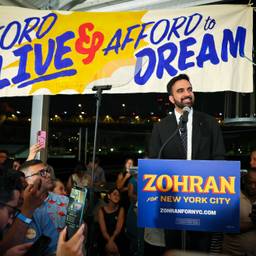
Both supporters and opponents anticipate a first-of-its-kind two-year rent freeze, fulfilling a key campaign pledge of Mayor Zohran Mamdani. The hearings also drew wider-than-usual participation from segments of the city’s labor movement that backed his insurgent campaign — including the Professional Staff Caucus (PSC), which represents CUNY faculty and staff.
Moving forward, PSC-CUNY First Vice President Jen Gaboury hopes to see more unions throw their weight behind the fight for an affordable city. “We have a huge opportunity here in New York,” she says. “We don’t want to see labor squander that.”
Much of the rent freeze debate has centered on the Bronx, which has some of the highest concentrations of rent-stabilized apartments in the city, much of it aging and in need of repair. But tenant advocates say that rising rents have largely been used to line landlords’ pockets rather than make those repairs — and that residents simply can’t bear further increases.
During the June hearing, one CUNY student struggling to catch up on rent described how her landlord, notorious for buying up rent-regulated apartments in the borough, has failed to remediate black mold. A staff member tasked with referring students to suitable affordable housing in the Bronx said the city was “asking us to look for opportunities that are not there.” And while no comparable data exists on the housing stability of CUNY faculty and staff, Hostos history professor Marcella Bencivenni said that wages hadn’t kept pace with soaring housing costs, particularly for part-time instructors and staff.
“This is a city’s crisis, and it’s not just the CUNY students who are suffering,” said Bencivenni, who herself lives in a rent-regulated apartment, in her testimony.
A vote to freeze the rent is expected to prompt legal challenges from landlord groups, who contend it would throw the rent-stabilized market into financial turmoil. Under former Mayor Bill de Blasio, the RGB voted to freeze rents on one-year leases three times, but there has never been a freeze on two-year leases. Six members of the current board were appointed by Mamdani, but their votes must be based on the economic conditions of the real estate industry.
Over the course of former Mayor Eric Adams’ tenure, stabilized rents rose by more than 12%. In March, the RGB released a study concluding that in 2024, the most recent year for which data is available, income had continued to increase faster than operating expenses in buildings with rent-regulated units, while the number of buildings in financial distress declined — findings that had many tenant groups advocating for not just a freeze but a rent rollback.
Mortgage payments aren’t factored into operating expenses, and landlord groups are raising the specter of a wave of foreclosures in rent-stabilized buildings. Tenant organizations, meanwhile, counter that residents shouldn’t be forced to bear the costs of unsustainable debts accrued through rampant speculation. A recent report from the credit ratings agency Moody’s concluded that even a five-year rent freeze would put only about 6% of landlords at risk of mortgage default.
Still, freezing rents is just the start of addressing the city’s housing crisis — and conditioning the labor movement to flex its muscles in new ways, says the PSC-CUNY’s Gaboury.
PSC was an early backer of Mamdani’s campaign, even as many of the city’s major labor unions stayed out of last year’s mayoral primary. Now, Gaboury wants to see labor seize the moment by partnering with the tenant organizations that helped fuel Mamdani’s victory, while also advancing a bold housing agenda that benefits union members.
“We’re trying to encourage others to be involved in this kind of work,” she says. “That involves all unions learning to exercise our power in a broader way.”
In the course of mobilizing members to attend rent freeze hearings, PSC also hosted political education on housing politics for members. Gaboury hopes that will serve as a foundation for the union to incorporate housing and affordability demands into its future contract fights, under the “bargaining for the common good” frameworks used to secure wins in cities like Chicago and Minneapolis. That could include campaigning for CUNY to build and maintain social housing, in conjunction with Mamdani’s push to create 200,000 new affordable homes citywide.

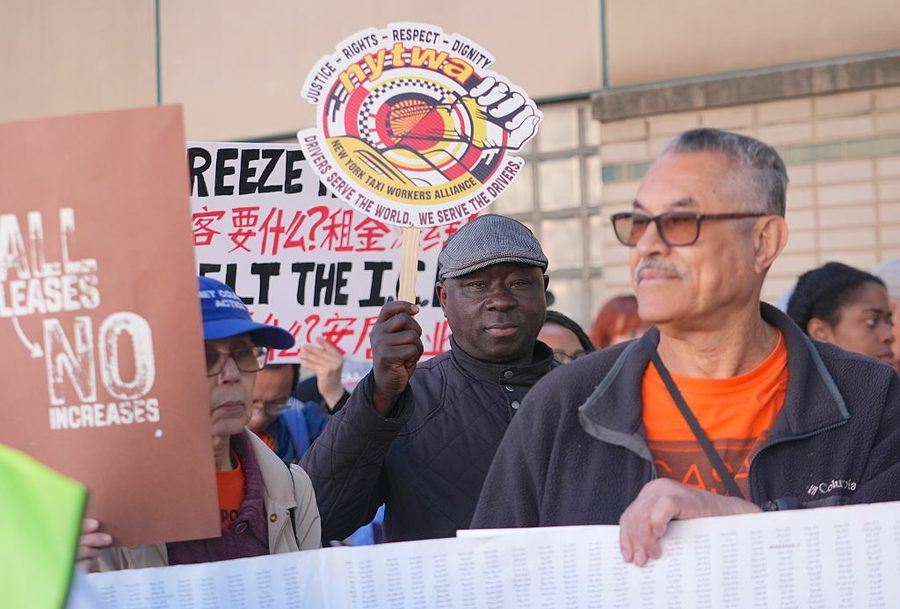
Bhairavi Desai, president of the New York Taxi Workers Alliance (NYTWA), also sees a critical opening for labor to join the fight for dignified housing.
“Affordable rent should be a central, essential demand of the labor movement as a whole,” says Desai, whose group backed the rent freeze campaign and has mobilized members to attend public hearings.
Housing is already interwoven into the NYTWA’s organizing, Desai says. The group often holds meetings in apartment buildings in Queens and the Bronx where taxi drivers make up a majority of residents. In addition to partnering with tenant unions to fight for improved conditions in those buildings, Desai sees opportunities to make use of some of the new tools and funding in Mamdani’s housing plan to help community organizations — including tenant associations — acquire buildings from negligent landlords.
In the meantime, NYTWA member Ibrahima Gory, who campaigned heavily for Mamdani, hopes to see more union members join the fight for pro-tenant policies. Gory, himself a rent-regulated tenant currently facing eviction, estimates that more than half of his income currently goes toward rent. He says it’s critical for tenants to provide a bulwark to the powerful landlord lobby.
“They’re so strong, they got money, whatever tools they can bring up to stop the mayor, they will do it,” Gory says. “Our role right now is to be behind him.”
— — —
For 50 years, In These Times has amplified the movements fighting for workers, against fascism and to build a more democratic future. Become a monthly sustainer today and keep independent journalism publishing for the next 50.

Get 10 print issues of our award-winning, worker-first journalism here!

Rebecca Burns is an award-winning investigative reporter whose work has appeared in Business Insider, the Chicago Reader, the Intercept, ProPublica Illinois and other outlets.