Real Estate Merger Poised to Create Several Local Apartment Monopolies
A combination between AvalonBay and Equity Residential would put close to 200,000 apartments in the hands of one company.
Rebecca Burns


In These Times is proud to be independent, pro-labor and anti-fascist. Support our work today and help left-wing journalism thrive.
— — —
This article is co-published with The American Prospect, a magazine about ideas, politics, and power.
A $69 billion merger between two real estate behemoths is set to create the largest publicly traded apartment landlord in U.S. history, dramatically expanding the market power of two firms that have been sued repeatedly over alleged tenant abuses and illegal price-fixing.
Together, real estate investment trusts (REITs) AvalonBay Communities and Equity Residential own more than 180,000 apartments nationwide, with another 20,000 under development. Were these two companies banks or broadcast networks or grocery stores, their merger would face mandatory review by federal regulators. But long-standing loopholes exempt real estate mergers from antitrust scrutiny — even as concerns mount about the consolidation of housing in the hands of large investors.
Equity Residential and AvalonBay are among dozens of investors that have already been accused of acting as a “cartel” to inflate rents during the pandemic, costing tenants billions. Just weeks before the two companies announced their planned merger in May, Equity Residential agreed to pay $56 million to resolve a class action antitrust lawsuit brought by renters. The company denied wrongdoing but also agreed to refrain from sharing private pricing data with RealPage, the tech company facilitating the alleged price-fixing conspiracy. AvalonBay still faces antitrust and consumer fraud claims involving RealPage, brought by the Washington, D.C., attorney general.
While the RealPage scandal thrust a novel antitrust issue — collusion by algorithm — into the spotlight, anti-monopoly advocates warn that ordinary mergers between rival firms remain a time-tested strategy to squeeze consumers.
“Instead of drawing on your number one competitor’s comps to set your prices, you just buy your competitor,” says Renee Tapp, an assistant professor of planning at the University of North Carolina who researches concentration in the rental market. In public comments to federal antitrust enforcement agencies submitted last month, Tapp called for stricter scrutiny of real estate mergers.
Through a sweeping analysis of nationwide property data, Tapp discovered that the merger between Equity Residential and AvalonBay will create effective monopolies in at least seven communities, potentially handing the new company more power to hike rents and trample tenant rights.
That could look something like what played out in East Palo Alto, California, after Equity Residential gained ownership of more than half of the city’s multifamily rental housing market in 2011.
In subsequent months, Equity Residential sent tenants more than 1,000 “pay or quit” notices, many of them seeking rents higher than the maximum allowable under the city’s rent control regulations. The company’s representatives then began working behind the scenes to challenge enforcement of those regulations, even briefly wrangling a vice chair seat on the city’s rent stabilization board.
Monopolies in rental housing have “the same effect as any other monopoly — only in this case, it’s monopolization of something that’s a human right,” says Margaret McBride, a managing attorney at Community Legal Services of East Palo Alto, where she worked with Equity Residential tenants facing evictions and increased fees.
“People don’t have an option to pick up and go somewhere else that’s still close to their family or their kids’ schools or their jobs,” she continues. “So they’re just stuck with a landlord who’s not respecting their rights.”
For decades, federal policy has effectively encouraged consolidation in the housing market, including through mortgage giants Fannie Mae and Freddie Mac’s post-2008 fire sales of foreclosed homes to investors.
But with some two-thirds of renters now struggling to afford basic needs, cracking down on corporate landlords makes for good politics. A rare bipartisan effort under way in Congress aims to stop Wall Street landlords from continuing to gobble up single-family homes, following a January executive order that also directed federal agencies to combat speculation and anti-competitive behavior in the single-family rental market.
Foreclosed houses are not the only properties in Wall Street landlords’ portfolios, however. Some three million apartments — about 1 in 8 nationwide — are now owned by private equity firms, according to an analysis by the Private Equity Stakeholder Project.
“Corporate landlords are invested in all sorts of housing beyond just single-family homes, and we desperately need federal policy interventions that address that reality,” says Sam Garin, the group’s senior communications coordinator.

The standard refrain from those corporate landlords — along with neoclassical economists and liberal policy wonks — is that even the largest firms still own just a small percentage of properties, leaving them with little power to set prices.
That’s true enough, if you look nationwide. But housing markets are inherently local, and recent empirical research suggests that when ownership is concentrated at the neighborhood level, landlords also enjoy considerable power to set rents — even without the help of price-fixing.
Through a flurry of mergers since the 2008 financial crisis and the establishment of rental real estate as an asset class, Wall Street landlords have been able to “leverage their market power to extract greater surplus from renters,” according to a 2023 study published in The Review of Financial Studies.
If Equity Residential and AvalonBay merge, just how much market power would the new, combined company have?
To estimate that, Tapp examined the 25 submarkets — a geographic area defined by the real estate industry — where both companies are already operating and compared their pre- and post-merger market share. She found that in seven of those submarkets, the new entity’s market share would exceed 30 percent — the threshold at which a merger is presumed to have anti-competitive effects, according to a landmark 1963 Supreme Court ruling.
In subsequent decades, federal courts abandoned that standard as antitrust enforcement waned. But the 30 percent benchmark was revived in 2023, when the Department of Justice (DOJ) and Federal Trade Commission (FTC) issued new merger guidelines as part of a more aggressive anti-monopoly agenda under President Joe Biden.
The 2023 guidelines — which are still in effect—consider both how much a merger would increase concentration and the total market share afterward. By both of those measures, according to Tapp, the seven submarkets she identified meet the threshold for antitrust scrutiny. Future acquisitions could easily put at least five other submarkets above that threshold, and Tapp says her estimates are likely conservative, given that she only examined existing properties in markets where both companies are already operating.
“In my mind this is irrefutable,” Tapp says. “This meets the definition of a monopolistic market, according to the FTC and DOJ’s own guidelines.”
AvalonBay did not respond to a request for comment.
Marty McKenna, a spokesperson for Equity Residential, said in a statement that one of the merger’s goals is “providing residents more choices and building more units.” He added that in markets where the two companies operate, their combined footprint represents less than 2 percent of available rental units.
McKenna did not respond to questions about how the company defines a “market” or the merger’s potential anticompetitive effects on the seven submarkets identified in Tapp’s property data analysis, including Los Angeles’ Little Tokyo.
In Los Angeles, it’s already difficult to find an apartment not owned by a corporate landlord, says tenant Alicia Yu.
Yu moved into a studio apartment owned by Equity Residential in 2024, immediately after living in a two-bedroom owned by AvalonBay. Yu had hoped the downgrade would cut her housing costs, but while her base rent has gone down, she says monthly fees charged by Equity Residential have soared — including a $100 parking fee that she claims wasn’t disclosed during her property tour, as well as variable building utility fees that add at least another $100 each month on top of her individual utility bills.
The news of a merger between her current and former landlords, which Yu received by e-mail last month, was alarming. Tenants in her building are already contending with maintenance issues like “constantly broken” elevators, Yu says, and she worries the problems will worsen if her landlords know that tenants effectively have nowhere else to go.
“To think of them getting even larger and managing even more properties — we’re going to be such a small speck in their brains,” Yu says. “They’re able to get away with overlooking these things that to them are very small and minute, but to us, we’re experiencing them on a daily basis.”


Equity Residential and AvalonBay share a business model built on nickel-and-diming tenants, according to Alex Ferrer, an organizer with the Debt Collective, a national organization that has fought to cancel billions in student and medical debt.
The group is now taking on the growing problem of “rent debt,” as tenants increasingly find themselves hounded by collection agencies, even after evictions, over unpaid balances inflated by myriad fees.
Last fall, Ferrer helped launch a reporting tool that tenants can use to dispute rent debts owed to corporate landlords, particularly those based on potentially abusive or deceptive practices. More than 100 AvalonBay and 60 Equity Residential tenants used the tool last year, allowing Ferrer to identify patterns, such as bathtub “reglazing fees” regularly tacked on by both companies after move-out.
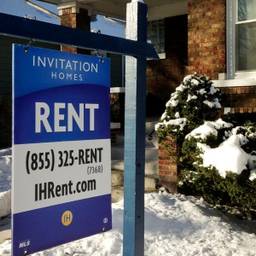
Equity Residential’s billionaire co-founder, Sam Zell, was an early proselytizer for boosting revenue by charging tenants junk fees on top of rent. It quickly became a mainstay strategy of corporate landlords: In 2024, the FTC reached a $48 million settlement with the rental giant Invitation Homes over undisclosed, mandatory fees that were costing renters more than $1,700 annually, according to the agency.
Federal judges have already struck down Equity Residential’s up-front “amenity fee” in Massachusetts and its 5 percent late fee in California. But new fees have taken their place. Both Equity Residential and AvalonBay currently charge tenants monthly surcharges based on the “ratio utility billing system” (RUBS) used in Yu’s building.

RUBS subdivides building-wide utility usage according to an opaque formula that tenants aren’t privy to, raising suspicions that landlords are using the system to disguise rent increases and circumvent rent control laws in states like California. Equity Residential reported earning more than $100 million from RUBS fees in 2025.
Last year, the Debt Collective and the Los Angeles Tenants Union began organizing with Equity Residential tenants against gratuitous fees, aggressive evictions, and other practices the groups believe will intensify if the firm controls even more of the market.
“The junk fees, RUBS, all these things are part of their business strategy, which relies on their ability to impose unfavorable contract terms,” Ferrer says.
Ferrer also notes that in recent years, the two landlords have also spent millions to defeat the expansion of rent control and other pro-tenant ballot measures in California. “They’re financing that with their monopoly power,” he says.
Antitrust regulators largely ignore the rental market, thanks in part to the explicit exemption of rental property acquisition from premerger review, a key enforcement tool established in 1976. The real estate loophole has been in place ever since, but there’s a chance that could soon change: The FTC and DOJ are currently considering improvements to the review process, including elimination of the exemptions for rental investment properties and REITs.
There’s a catch though: The agencies are undertaking a new rulemaking process because, earlier this year, a Texas federal court struck down new premerger review requirements finalized during the Biden administration, which drew a legal challenge from the Chamber of Commerce and other business groups.
Laurel Kilgour, research manager for the anti-monopoly watchdog American Economic Liberties Project, says that while the possibility of eliminating real estate exemptions is “a silver lining,” the prospect of the agencies going back to square one is concerning. The longer rulemaking takes, she says, “the more [merger] transactions that are going through without sufficient scrutiny.”
Meanwhile, real estate lobby groups remain staunchly opposed to stronger regulatory scrutiny. In a comment submitted to the federal agencies, Nareit, a trade group that represents REITs including Equity Residential and AvalonBay, argued that real estate transactions remain “unlikely to violate the antitrust laws,” adding that the group is “unaware of any relevant geography that is highly concentrated by owner.”
Nareit did not respond to a request for comment on Tapp’s finding that a merger between Equity Residential and AvalonBay would create at least seven highly concentrated submarkets.
During a May conference call about the merger, Equity Residential President Mark Parrell told analysts that while the merger wouldn’t be subject to an antitrust review, the company was preparing for a “PR battle.”
Should the deal be approved by stockholders later this year, the companies say they expect to save $175 million in costs within the next 18 months.
While Parrell told participants that the deal was “not about getting bigger just to be bigger,” he noted that Equity Residential and AvalonBay had already successfully teamed up to acquire tens of thousands of apartments from the bankrupt Lehman brothers — a 2011 deal that, along with the purchase of 1,800 foreclosed units from Wells Fargo, put Equity Residential in control of more than half of East Palo Alto’s apartments.
Preschool teacher Javanni Brown was living in one of those apartments when, while her husband was out of work, she found herself late on rent.
Brown’s existing lease stipulated a small late fee — which she paid, along with her full rent, four days after the grace period, according to a class action lawsuit later filed against the company.
But when her balance due continued to increase in subsequent months, Brown learned that the late fee had increased — and that the company was also “stacking” new late fees on top of past unpaid ones, both allegedly without notice to tenants.
“I said, ‘Wait a minute, that doesn’t make any sense, because that kind of practice doesn’t let people actually come up for air,’” she recalls.
A federal judge ultimately struck down Equity’s late-fee policy, which charged tenants the greater of 5 percent or $50, as an unlawful business practice under California law. Equity agreed to a $43 million settlement, and some 200,000 California tenants who were charged late fees are set to receive restitution this year. But the legal process took more than a decade.
In states like California, where the merger might have outsize impact for tenants in some local markets, state attorneys general have the power to bring their own actions, even in the absence of federal enforcement, notes Kilgour.
That wouldn’t be dissimilar to the coalition of six attorneys general that joined a federal action to successfully halt the merger of Kroger and Albertsons grocery stores, Kilgour says, but “this is an even stronger overlap of geographies.”
Rather than leaving the ball in the Trump administration’s court, says Ferrer, action to stop the merger could also represent “a populist political opportunity for Democrats … to protect renters by taking on actors that are very powerful and incredibly unpopular.”
— — —
For 50 years, In These Times has amplified the movements fighting for workers, against fascism and to build a more democratic future. Become a monthly sustainer today and keep independent journalism publishing for the next 50.

Get 10 print issues of our award-winning, worker-first journalism here!

Rebecca Burns is an award-winning investigative reporter whose work has appeared in Business Insider, the Chicago Reader, the Intercept, ProPublica Illinois and other outlets.