"It Is Like Martial Law Here"
Activists are targeted in Philippines human rights violations and militarization.
Alessandra Bergamin
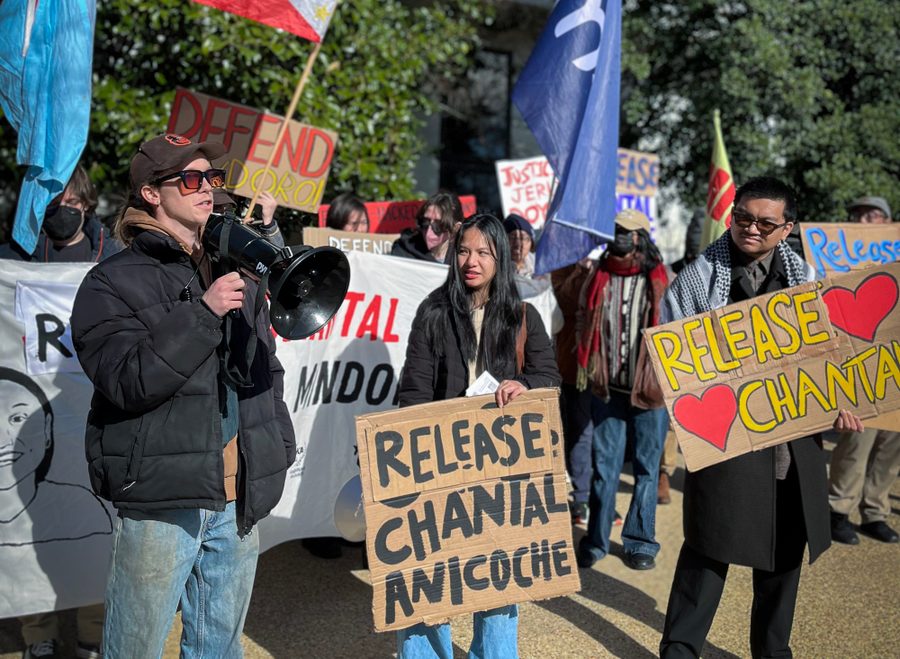

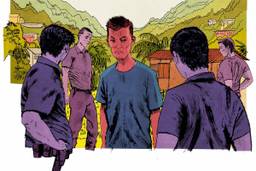
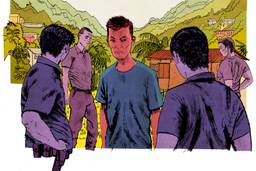
ABRA DE ILOG, PHILIPPINES — Eight days into the new year, in the stifling aftermath of a state-sanctioned attack on the Philippine village of Abra de Ilog, the country’s armed forces shared a video of Filipina American Chantal Anicoche to its Facebook page. Filmed by the military’s 203rd Infantry Brigade in the province of Mindoro Occidental, the video shows Anicoche clambering out of a vine-covered pit, barefoot, sallow and drawn.
Cowering, Anicoche is led to a clearing. She sits on the ground as a soldier asks, “Why are you here?”
A passionate activist from Maryland, 24-year-old Anicoche had moved to Abra de Ilog the month prior to learn from the Indigenous Mangyan-Iraya and peasant communities that are resisting extractive industries, militarization and state violence. On New Year’s morning, the armed forces claimed to engage in several clashes against the New People’s Army (NPA), a Maoist insurgency group classified by the government as terrorists. The ground invasion was followed by aerial bombing and strafing.
After the maelstrom, Anicoche was reported missing.
In the video, which marked the first time she had been seen publicly in a week, Anicoche speaks quietly, glancing at the soldiers surrounding her, and recounts a confusing story about why she is there. Her staccato words are seemingly insufficient, and the soldier filming presses her again.
“We’re trying to help you,” he says. “So you better tell us the truth.”
As friends, fellow activists and advocacy groups have reiterated, neither the video nor the military’s narrative add up. According to that narrative, Anicoche had been without food or water for more than a week when the military found her (and yet, she was miraculously upright and walking). Allegedly, she sustained no injuries except for a few insect bites (and yet, she required hospitalization at an army camp). Allegedly, she voluntarily stayed at that camp for 22 days (and yet, she never once spoke for herself despite constant press releases and social media posts).
“It looks very staged,” said Jom Dolor, deputy secretary general of Migrante USA, a progressive alliance of U.S. Filipino migrant workers, noting there are points “riddled with holes that really cast doubt on the military’s narrative.”
While the U.S. embassy and the International Committee of the Red Cross both conducted welfare checks on Anicoche before she was released on January 29, neither issued any public statement. The Red Cross confirmed meeting with Anicoche but said its meetings with people affected by armed conflict or other violence are “strictly confidential.” The embassy did not respond to requests for comment.
“There’s no way that [Anicoche] would want to be in the care of the military,” said Brandon Lee, a Chinese American activist and chair of the solidarity network International Coalition for Human Rights in the Philippines. “Even [through] her work in the U.S., she was always exposing their human rights violations.”
Lee is all too familiar with being a target of the state. In 2019, while working alongside Indigenous communities in the country’s north, he was shot and paralyzed by suspected members of the 54th Infantry Battalion, as documented in a 2024 In These Times investigation. In the months before the attack, Lee was harassed, surveilled and “red-tagged” by the military — falsely labeled as a member of the NPA and, therefore, according to Philippine law, a terrorist.
In 2023, in a similar case to Anicoche’s, environmental activists Jhed Tamano and Jonila Castro were abducted and interrogated for nearly three weeks by suspected members of the 70th Infantry Battalion. Under threat of death, the two activists signed an affidavit supposedly confirming they were NPA members. At a government press conference, Tamano and Castro announced they had been abducted by the military and coerced into a false confession.
The pair believed that “the moment we told the truth, the military might put us in jail, they might return us to the camp, kill us, anything,” Castro told me in an interview in Manila shortly after she was released. But at the press conference, she continued, “The only thing on my mind was that I have to tell the truth to the public.”
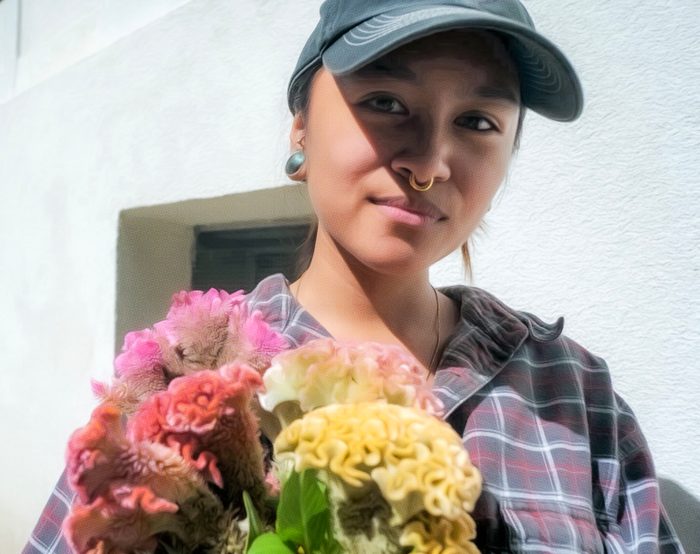
Across the country, particularly in Indigenous and peasant communities, a familiar pattern has emerged in which resistance to unwanted development and extractive projects is met with militarization and accusations of terrorism. Under that system, extrajudicial killings, enforced disappearances and indiscriminate bombings are not only state-sanctioned, but have become normalized in the name of counter-insurgency efforts. Globally, between 2012 and 2022, about one environmental defender was killed every other day, according to the international human rights group Global Witness. In the Philippines, an In These Times data analysis conservatively found evidence of state involvement in 109 of 210 such killings between 2014 and 2024.
On the resource-rich island of Mindoro, where Indigenous and peasant communities have protested to safeguard their land from encroaching renewable energy, mining, hydropower and ecotourism projects, the environmental advocacy network Defend Mindoro documented 17,506 victims of human rights violations from January 2025 through March 2026. This figure includes victims of five cases of aerial bombing and strafing, and the killing of two red-tagged farmers by the Philippine armed forces. The military attack on January 1 this year — just seven months after the Supreme Court overturned a 25-year moratorium on large-scale mining — not only destroyed farmland and livestock but killed five people, including three Mangyan-Iraya children. The military has since increased its presence in the community, imposing a mandatory curfew, said an activist from Defend Mindoro.
“They are not declaring it, but it is like martial law here,” said the activist, who requested anonymity because of the surveillance and harassment other organizers have faced.
Across the Philippines, this extensive militarization has been made possible through billions of dollars of security assistance from the United States. The current National Defense Authorization Act includes up to $2.5 billion in foreign military financing to the Philippines over the next five years. While the funding is purportedly meant to help the Philippines safeguard its sovereignty as tensions intensify in the South China Sea, military violence against environmental defenders means U.S.-provided weapons, training and equipment may have been used against activists. For example, according to human rights organizations, U.S.-provided Black Hawk helicopters, manufactured by defense contractor Lockheed Martin, have reportedly been used in bombings and aerial strafing in the provinces of Masbate, Negros Occidental and, most recently, Mindoro Occidental.
Since August 2025, 15 new helicopters have arrived in the Philippines, the latest batch delivered in late January. For years, U.S. activists, including Lee and Anicoche, have campaigned — so far, unsuccessfully — to pass a federal bill, the Philippine Human Rights Act, which would impose limitations on security assistance extended to the police and armed forces.
The U.S. government “doesn’t want Americans to know it’s our tax dollars that are subsidizing these military activities,” said Rika Ramos, a Filipina American activist. That lack of public knowledge allows the Philippine government to “continue acting with impunity and get away with these horrific crimes against people dissenting.”
On January 29, a month after she disappeared, Anicoche was “medically discharged” from the army hospital and returned home to the United States. Upon her release, the Philippines’ National Task Force to End Local Communist Armed Conflict claimed Anicoche had confessed to traveling to the country to connect with the NPA and that she had been staying at an NPA camp during the military encounter.
But years of activist testimony — from Lee, Tamano, Castro and others — suggest her statements were not so much an admission of guilt as a life-saving strategy in harrowing circumstances. So far, Anicoche’s family has declined to comment, stating that Anicoche will speak when she is ready.
While the case has drawn international notice because Anicoche is a U.S. citizen, Lee said, by “no means is this an isolated incident. It is happening all over the Philippines, especially among Indigenous and peasant communities.” And it’s not going to stop, Lee suggests, until the United States stops supporting the Philippine government.

Get 10 print issues of our award-winning, worker-first journalism here!