Workers and organizers cite outside interference, management collusion, union missteps, two-tier agreements and Neil Young
“I am excited,” auto worker Justin King told me as he put on his cowboy boots to get ready for the victory party planned for late Friday night. At approximately 10 p.m., the United Auto Workers union and Volkswagen would announce the results of a three-day union election at the Volkswagen plant in Chattanooga, Tenn.
King had reason to be excited. For nearly three years he had campaigned to get the union into his plant. As one of the leaders of the drive, his sense was that the UAW had the support of the majority of the plant’s 1,550 hourly workers. Unlike in most union drives, organizers didn’t have to worry about the company threatening workers’ job, because Volkwagen had agreed to remain neutral in the process, so King felt cautiously optimistic that the support would hold.
But Justin King never got to enjoy his victory party. An hour after we spoke, retired Circuit Court Judge Samuel H. Payne announced to a roomful of reporters assembled in a Volkswagen training facility that the UAW had lost the campaign, with 626 workers voting in favor of the union and 712 voting against. To the labor reporters, who had seen many union election results, it was jaw-dropping news. How could a union lose an unopposed campaign?
Volkswagen signed a 22-page neutrality agreement pledging not to interfere in the union election at the Chattanooga plant. The company even let the union onto the shop floor in early February to give a presentation on the merits of organizing.
It is impossible to say why each of those 712 workers voted against the union and what the UAW could have done differently to win them over one by one. However, In These Times’ interviews with both pro-union and anti-union workers — as well as low-level Volkswagen supervisors, top UAW officials and community activists — point to a confluence of factors, including outside interference by GOP politicians and unsanctioned anti-union activity by low-level supervisors. Some questioned, too, whether missteps by the UAW and concerns about its prior bargaining agreements played a role.
GOP influence
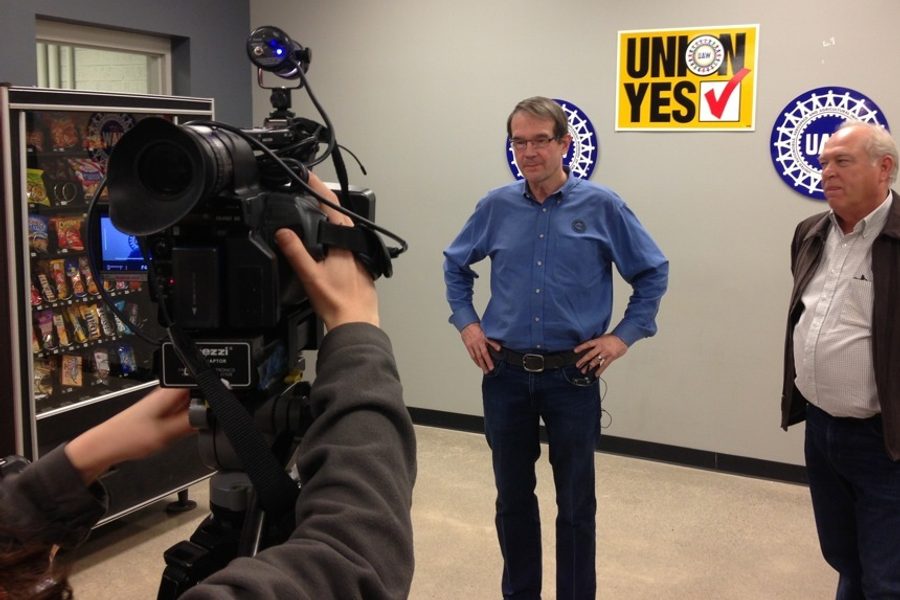
The UAW was quick to blame the loss on public anti-union threats by right-wing politicians. Immediately following the election results, UAW President Bob King informed reporters, “We are obviously deeply disappointed. We’re also outraged by the outside interference in this election. Never before in this country have we seen a U.S. senator, a governor and a leader of the Legislature threaten the company with incentives and threaten workers with a loss of product. That’s outrageous.”
Last week, Tennessee’s Republican Governor Bill Haslam told the Tennessean, “I think that there are some ramifications to the vote in terms of our ability to attract other suppliers. When we recruit other companies, that comes up every time.”
On Monday, two days before the election began, Republican State Senate Speaker Pro Tempore Bo Watson and Republican House Majority Leader Gerald McCormick suggested that Volkswagen might not receive future state subsidies if the plant unionized.
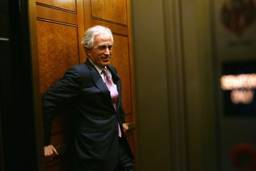
Then on Wednesday, U.S. Sen. Bob Corker (R-Tenn.) — the former mayor of Chattanooga — who had pledged the previous week not to comment publicly about the ongoing election, waded back into the debate to declare, “I’ve had conversations today and based on those am assured that should the workers vote against the UAW, Volkswagen will announce in the coming weeks that it will manufacture its new mid-size SUV here in Chattanooga.”
When Volkswagen Chattanooga Chairman and CEO Frank Fischer refuted Corker, saying the union election would have no effect on the SUV decision, Corker doubled down. “Believe me, the decisions regarding the Volkswagen expansion are not being made by anyone in management at the Chattanooga plant, and we are also very aware Frank Fischer is having to use old talking points when he responds to press inquiries,” Corker said in a statement on Thursday. “After all these years and my involvement with Volkswagen, I would not have made the statement I made yesterday without being confident it was true and factual.”
At a press conference following the vote announcement, UAW Secretary-Treasurer Dennis Williams echoed union president Bob King in blaming the loss of support for the union on the Republican politicians’ statements.
“When the governor made his comments, we saw some movement at that time,” said Williams. “When Sen. Corker said he was not going to be involved and then he came back from Washington, D.C., we had a feeling that something was happening. Forty-three votes was the difference, so it’s very disturbing when this happens in the United States of America when a company and a union come together and have a fair election process.”
The UAW also announced shortly after the election that it was exploring legal options and might petition the National Labor Relations Board to order a new election because of the threats issued by Corker, the governor and the leaders of the Tennessee State House and Senate.
Opposition at the plant
However, threats of workers losing their jobs are routine during union elections — though they usually come from management, not outside forces — and unions still often prevail. Both pro-union workers and anti-union activists said that other factors played key roles in derailing the union drive.
While the neutrality agreement forbade Volkswagen from campaigning against the drive, plant worker and union activist Byron Spencer says that low-level supervisors and salaried employees — who were not eligible for the union — ignored the directive and actively opposed the drive. He also reports seeing multiple low-level supervisors and salaried employees at the plant wearing “Vote No” T-shirts in the days leading up to the union election.
Pro-UAW worker Wayne Cliett says there is no doubt in his mind that the opposition by salaried employees hurt the campaign. “The salaried people from Pilot Hall [the prestigious research and development center at the plant] stood out front every day this past week with [anti-UAW] shirts on, and I truly believe they swayed the votes their way,” says Cliett.
Indeed, In These Times interviewed one salaried employee, Mary Fiorello, who actively participated in the No 2 UAW committee, an anti-union effort organized by a group of hourly workers, who were eligible for the union.
“You have to look at from the point of view of a salaried support person,” says Fiorello. “My job here is to help them do their job. I don’t get paid if they don’t make cars, and the union makes it all that harder. If they want to ask me for help on something and its a union facility, they can’t even come up and ask me for help. And it makes it so much tougher for us here to be a team — and we are a team, and it’s upsetting when a group comes down from Detroit and tells us how we should be.”
Criticisms of the UAW
The No 2 UAW campaign used the very neutrality agreement that the UAW signed to argue that the union was making corrupt deals with management without worker input. The anti-union campaign argued that the neutrality agreement seemed to indicate that UAW would not bargain for wages above what was offered by Volkswagen’s competitors in the United States. UAW and Volkswagen agreed to “maintaining and where possible enhancing the cost advantages and other competitive advantages that [Volkswagen] enjoys relative to its competitors in the United States and North America.”
“We got people to realize they had already negotiated a deal behind their backs — [workers] didn’t get to have a say-so,” hourly plant worker Mike Jarvis of No 2 UAW told reporters outside of the plant last night.
Fiorello also cited the UAW’s past concessions in bargaining with other automakers as another example of why she opposed the union. In a series of contract negotiations in the late 1990s and 2000s, the UAW agreed to a two-tier wage system at Volkswagen’s competitors at the Big Three automakers — General Motors, Ford and Chrysler. Two-tier agreements specify that new hires will earn significantly less than existing workers. Fiorello notes that currently, new non-union assembly line workers at Volkswagen start at $14.50 an hour—which, with cost-of-living differences between Tennessee and the Midwest factored in, is arguably slightly higher than the just-under-$16-an-hour starting pay under the UAW two-tier contracts at the Big Three.
“See, that’s the kind of problem. Our guys are being paid more than the union [workers at the Big Three],” says Fiorello.
“What the UAW is offering, we can already do without them,” says hourly worker Mike Burton, who created the website for the No 2 UAW campaign. “We were only given one choice [of a union]. When you are only given one choice, it’s BS. It would be nice if we had a union that came in here and forthright said, “Here is what we can offer.”
“I am not anti-union, I am anti-UAW,” Burton continues. “There are great unions out there, and we just weren’t offered any of them.”
Burton’s argument seemed to mirror that of Sen. Bob Corker, who routinely made statements such as, “”It’s not about union or anti-union, it’s about the way the UAW conducts business.”
When asked by In These Times if the UAW’s history of two-tier contracts hurt the unions’ ability to win over skeptical workers, UAW President Bob King responded, “I don’t know. I am not going to speculate because I wasn’t in the plant.”
Questioned by Lydia DePillis of the Washington Post about why the union had agreed to cost-containment measures as part of the collective bargaining agreement, King responded, “Our philosophy is, we want to work in partnership with companies to succeed. Nobody has more at stake in the long-term success of the company than the workers on the shop floor, both blue collar and white collar. With every company that we work with, we’re concerned about competitiveness.”
Some labor observers have questioned whether provisions in the neutrality agreement may have also hampered the UAW’s ability to make its case. “Though neutrality agreements often help avoid vociferous employer opposition, unions also have to give up powerful organizing or negotiating tools,” says Moshe Marvit, a labor lawyer and fellow at the Century Foundation. In the case of the Chattanooga drive, the neutrality agreement barred the UAW from making negative comments about Volkswagen. It also specifically prevented the UAW from holding one-on-one meetings with workers at their homes except at the worker’s express request. House visits are a common tactic used by union organizers to build trust with workers and answer questions about individual needs and concerns. One longtime labor activist, Peter Hogness, was so shocked that the UAW didn’t do house visits that he sent me a message today to ask me if it was true.
When asked by In These Times if the inability to make house visits hurt the union drive, UAW Secretary-Treasurer Dennis Williams simply responded, “No.”
Also, pro-union community activists, who spoke with In These Times on condition of anonymity out of fear of hurting their relationships with the UAW, spoke about difficulties in getting the UAW to help them engage the broader Chattanooga community. Many activists I spoke with during my two trips to Chattanooga said that when they saw the UAW being continually blasted on local talk radio, newspapers and billboards, they wanted to get involved to help build community support.
However, they say that the UAW was lukewarm in partnering with them. Indeed, when I attended a forum in December organized by Chattanooga for Workers, a community group designed to build local support for the organizing drive, more than 150 community activists attended — many from different area unions — but I encountered only three UAW members. Community activists said they had a hard time finding ways to coordinate solidarity efforts with the UAW, whose campaign they saw as insular rather than community-based.
“There’s no way to win in the South without everyone that supports you fighting with you,” said one Chattanooga community organizer, who preferred to remain anonymous. “Because the South is one giant anti-union campaign.”
A harsh Southern climate
Still, at the end of the day, unions make missteps in union elections all the time and often face opposition from management, and the workers still sometimes win. Indeed, the NLRB reports that unions won 60 percent of elections conducted in fiscal year 2013. So why didn’t the UAW win in Chattanooga?
“We thought we had the number we needed,” says Cliett. “We could analyze for days and not really know for sure, but I do think the last minute blitz of negative campaigning from our politicians turned some votes to no. What is going on with these people? Lynyrd Skynyrd may not have liked the song written by Neil Young, ‘Southern Man,’ but Neil had a point.”
In the 1974 song “Sweet Home Alabama,” Ronnie Van Zant of Lynyrd Skynyrd sings, “Well I hope Neil Young will remember: A Southern man don’t need him around anyhow.” The lyric is a reference to Canadian singer Neil Young’s “Southern Man,” which criticized Southerners for being opposed to social change.
But for one Southern man, progress still feels achievable. “I’m a stubborn man,” says Cliett. “Some are talking about quitting. I will be walking into the plant on Monday with my head held high and preaching the message of solidarity.”
Full disclosure: The author’s mother worked on an auto assembly line at a VW plant in Westmoreland County, Pa., until it closed in 1988, and was a member of UAW. UAW is a website sponsor of In These Times. Sponsors have no role in editorial content.

Get 10 print issues of our award-winning, worker-first journalism here!